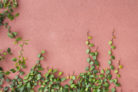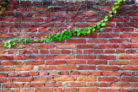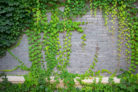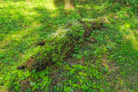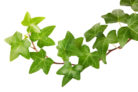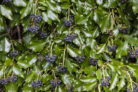
Ivy has come up with a pretty clever way to get vertical. It uses what we call “adventurous” aerial roots—they’re tiny and delicate-looking, but they pack a serious punch when it comes to grip. These little guys will grab onto just about any support and can climb up to 65 feet high. Just a heads-up: if you ever decide you want to pull that ivy back down, you’re in for a real workout!
Two Types of Roots
Hardy ivy actually grows two different types of roots: primary roots and aerial (cling) roots. The primary roots stay in the ground, doing the heavy lifting of supplying the plant with water and nutrients. Occasionally, some of these can wedge themselves into cracks in walls and cause a bit of damage.
The aerial roots have one specific job: anchoring the vines to whatever support they can find. Without these anchors, the plant can’t grow upward. You’ll see them popping up in huge numbers all along the stems.
How Does the Grip Work?
Ivy is what we call a “self-clinger” because those aerial roots can scale a surface all on their own—even a relatively smooth wall. The tips of the roots act almost like tiny suction cups, locking themselves onto the support structure.
Getting the Growth Started
Ivy is smart—it only grows aerial roots when it actually needs them. After planting, it usually takes 2-3 years for the plant to really settle in. During this “toddler phase,” it grows slowly and doesn’t show much interest in climbing. That’s why you won’t see many (if any) aerial roots on a young plant.
Once it’s established, though, growth takes off and the vines start stretching out. If they find a trellis or wall, they’ll start to climb. But here’s the kicker: the roots don’t just appear out of nowhere. They only develop when the vine makes direct contact with a surface or the ground. No contact, no roots!
Differences Between Ivy Varieties
While there’s no such thing as an ivy without aerial roots, different varieties have different “grip strengths.” The Common Ivy (*Hedera helix*) is the champion climber and produces a ton of roots. Irish Ivy is a bit more laid back, and Persian (Caucasian) Ivy produces very few. If you’re planning to cover a house wall, keep these traits in mind:
- Common Ivy: Very difficult to remove because of the sheer number of roots.
- Irish Ivy: A bit easier to manage but still has plenty of grip.
- Persian Ivy: Has a weaker grip and can actually be torn down by heavy winds.
Pro Tip:
Persian Ivy has beautiful variegated foliage. You don’t have to skip out on this decorative climber; just make sure to manually tie the vines to your support every so often. This keeps it “storm-proof” even with its weaker natural grip.
Removing Aerial Roots from a Wall
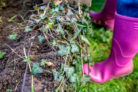
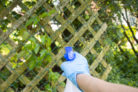
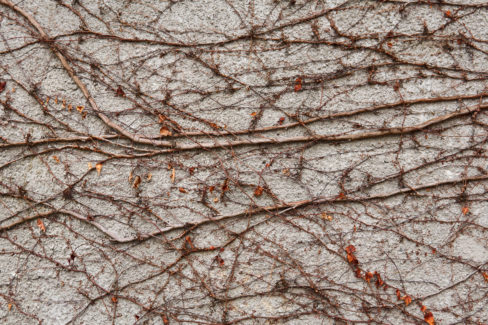
If you pull ivy vines off a house, you’ll notice that most of those tiny root tips stay stuck to the siding. They don’t usually cause structural damage like the main roots can, but they definitely don’t look pretty. To clean them off, grab a wire brush and a bucket of soapy water. You’ll have to scrub the wall section by section. In some cases, a power washer can also do the trick.
Pro Tip:
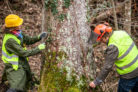
Always wear gloves, long sleeves, and safety glasses when removing ivy because the plant is quite toxic. Also, don’t toss vines with aerial roots into your compost pile—they are survivors and will try to take root right there! It’s best to dispose of them in your regular household trash.