Ivy has everything a plant needs to reach for the sky: it grows like crazy, has long, flexible vines, and is covered in tiny “sticky” roots. But if you want it to actually go up, you’ve got to give it a solid support system. The trick is choosing a trellis or surface that the ivy can grab onto easily and naturally.
Ivy Needs a Helping Hand to Climb
Left to its own devices, ivy doesn’t have a rigid trunk to keep it upright. If you want it to head toward the clouds after planting, a support structure is a must. Since ivy is a “self-climbing” plant, it does the heavy lifting itself once it finds a surface. Those vines are packed with countless aerial rootlets that act like tiny suction cups to lock the plant in place.
Pro Tip:
After about 2 or 3 years, your ivy will really start to hit its growth spurt, even without regular fertilizing. You’ll want to have your trellis ready to go by then at the latest!
Give Those Rootlets Something to Grab
Those thin, short aerial roots can’t stick to just anything. Smooth metal surfaces, for example, are usually too slick for them to get a grip. Ivy much prefers:
- Anything made of wood
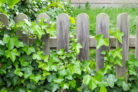
- Wooden fences, specialized trellises, or even living trees
- Stone or brick walls
- Sturdy structures (remember, ivy gets surprisingly heavy as it ages!)
Quick Note:
There’s no such thing as ivy without aerial roots. However, the plant only starts producing them once the vines actually touch a surface they can anchor to.
Climbing Walls: What You Need to Know
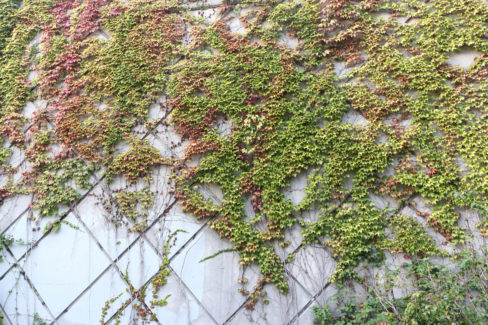
If you’re planning to let your ivy climb a wall, there are a few things to keep in mind:
- The wall needs to be in tip-top shape.
- Roots can find their way into tiny cracks and expand them over time.
- In the worst-case scenario, this can actually damage the structural integrity of the masonry.
- Avoid very bright or white walls; they reflect too much light.
- Since ivy loves the shade, it might actually grow away from a wall that’s too bright.
Also, keep in mind that removing ivy from a house wall is a major chore. Only plant it there if you’re happy to let it stay for the long haul.
Ivy and Chain-Link Fences
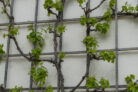
Let’s be honest: chain-link fences aren’t exactly a backyard highlight. Ivy is a great way to turn that metal into a lush green screen. However, those little roots can’t really “stick” to thin wire, so you’ll need to help it out at first. Just weave the first few vines through the mesh manually. Once they’re established, the new growth will use the older vines as a support to hold onto.
Growing Without a Trellis
If you don’t want your ivy to climb, it also makes a fantastic groundcover for those tricky shady spots in your garden. It also looks beautiful in hanging baskets or window boxes, where gravity lets the vines trail down for a classic, elegant look.