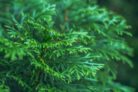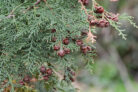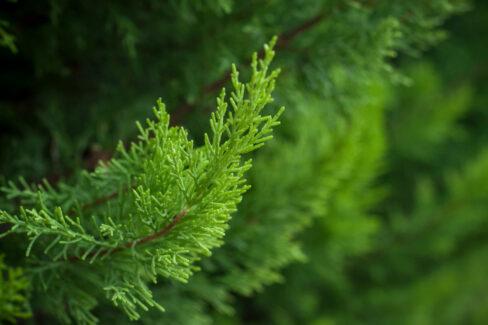
When you give them the right spot and a little TLC, Leyland Cypresses are incredibly tough customers. Usually, they can fend off pests and diseases all on their own. If you do notice a problem, it’s often a sign that the tree is stressed from a care mishap. But don’t worry—with these tips, you can get your cypress back on track!
Common Pests to Watch Out For
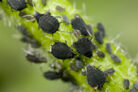
Even the hardiest cypress can occasionally deal with unwanted guests. If you spot aphids, bark beetles, or moths, you’ll want to jump into action pretty quickly.
Here’s the best way to handle it:
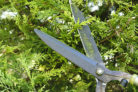
- Prune away any infested branches as soon as you see them. For smaller trees, you can often knock off aphids or moths just by giving the foliage a gentle spray with your garden hose.
- If you discover bark beetles, I have some tough news: the only real fix is to remove the entire plant. These pests are nearly impossible to get rid of once they move in, and they’ll spread like wildfire to nearby trees—including your neighbor’s!
What’s Up with Those Brown Spots?
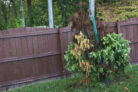
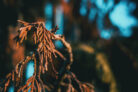
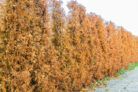
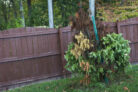
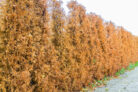
If your fast-growing cypresses start showing brown needles, it’s almost always a “Goldilocks” problem—the soil is either too wet or too dry.
Standing water (wet feet) is the biggest danger here. Leyland Cypresses absolutely hate waterlogged soil. If your garden has heavy, wet soil, it’s a great idea to install some drainage before planting.
If you notice browning right after winter, it’s usually not frostbite—it’s actually dehydration.
Here’s how to fix it:
- Prune off all the dead, brown branches.
- Make sure the plant is getting enough water.
Those fine needles on a Leyland Cypress lose moisture even in the winter. Make sure to water your trees during the colder months (on days when the ground isn’t frozen) so the root ball never completely dries out.
Fungal Diseases to Keep an Eye On
When a cypress is thirsty, its “immune system” takes a hit, making it an easy target for fungi.
Keep an eye out for these common issues:
- Seiridium Canker: This usually shows up during droughts and can cause sunken sores or “cankers” on the bark.
- Needle Blight: Also triggered by underwatering, this causes the needles to discolor and drop.
- Phytophthora (Root Rot): This is the result of too much water or poor drainage, and it can unfortunately be fatal for the tree.
If a fungal infection has really taken hold, you might have to remove the tree entirely. However, if you catch it early, a good fungicide can often save the day!