Orchid leaves aren’t just there to look pretty—they’re actually vital for soaking up moisture and nutrients. Even if you’re a pro at plant care, it’s totally normal for older leaves to wither away as fresh green ones take their place. But if you spot tiny leaves popping up on a stem, you’ve hit the jackpot! Those are usually “babies,” known as keikis.
Out with the Old, In with the New
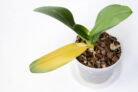
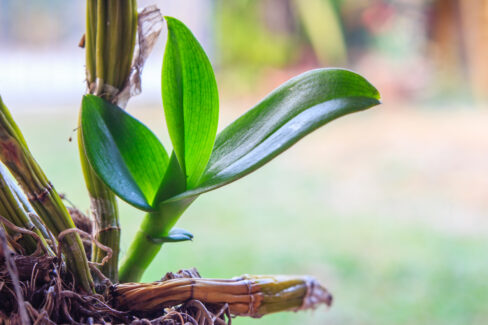
Every so often, your orchid will sprout new green leaves. These always grow from the top of the “heart” (the center of the plant). When a new leaf emerges, the plant usually retires the bottom-most, oldest leaf. It’ll wither and fall off naturally—don’t worry, it’s just the circle of life!
Leaves on Stems or Bulbs
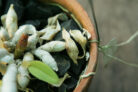
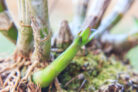
Sometimes, you might notice tiny leaves growing directly on a flower spike or a bulb. These are called keikis (Hawaiian for “baby”), and they are essentially little offshoots you can use to propagate your plant. Some varieties are more prone to “having babies” than others, including the popular Phalaenopsis (Moth Orchid).
The coolest part? A keiki is a genetic clone of the mother plant, so it will produce the exact same flowers.
Caring for Your Keiki
If you spot a baby, just leave it on the mother plant for a while and watch it grow. Usually, the “mom” plant provides all the nutrients it needs. You can give it a little boost by misting it with water regularly, just like you would with the mother’s aerial roots and leaves. After a few weeks, it should develop several leaves and its own set of roots.
Once it has a healthy root system, you can carefully snip it off and pot it on its own. Use a small pot with high-quality orchid substrate. These little guys love humidity, so try using a mini-greenhouse or simply placing a clear plastic bag over the pot to keep the air moist.
All Leaves and No Flowers?
If your orchid is growing leaves like crazy but refuses to bloom, it might need a little “cold shock” to wake it up. Try moving it to a spot that’s about 10°F (5°C) cooler than its usual home for a few weeks. Keep watering and fertilizing as usual to give it the energy it needs to sprout a new spike. Often, that simple temperature drop is all it takes to trigger those beautiful blooms!