A healthy orchid is a real showstopper with its firm, glossy green leaves. But if you notice those leaves looking limp, wrinkled, or sad, it’s usually a cry for help regarding its water intake. Don’t panic, though! With a few simple tweaks, you can get your orchid back to its vibrant self.
Is it just the bottom leaf?
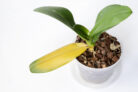
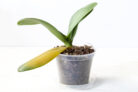
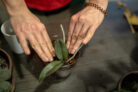
If you only see one withered leaf at the very bottom of the plant, take a deep breath—this is usually just the natural aging process. Orchids tend to shed their oldest bottom leaf as they grow a fresh new one at the top. Once that bottom leaf is completely dried out and crispy, you can just give it a gentle tug to remove it.
Why are the leaves wilting?
If several leaves (or the whole plant) look shriveled and floppy with noticeable ridges on the surface, you’ve got a bigger issue. Most of the time, it comes down to watering habits. It’s usually one of two extremes:
- Not enough water (dehydration)
- Too much water (root rot causing a “water blockage”)
Underwatering
Limp, leathery leaves are the classic sign of a thirsty plant. If the orchid goes too long without a drink, the roots can’t send enough moisture or nutrients up to the leaves. To compensate, the leaves lose their tension and start to sag.
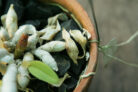
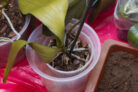
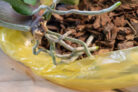
Check the roots and the potting mix. If everything feels bone-dry, give your orchid a “spa day.” Submerge the entire inner pot in a basin of lukewarm water for a few hours. You’ll know it’s working when the air roots turn from silvery-grey to a plump, juicy green.
Going forward, try the soaking method once or twice a week whenever the substrate feels dry. Orchids also love humidity, so giving the leaves and air roots a light misting every now and then can work wonders.
Overwatering and Standing Water
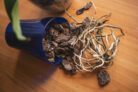
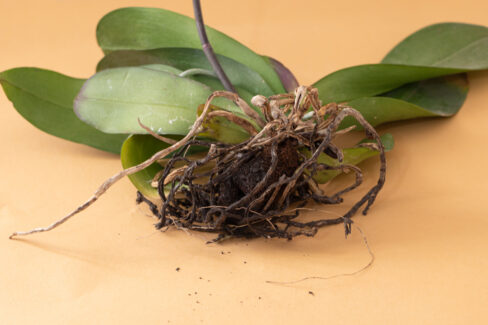
It sounds counterintuitive, but too much water can also cause wilted leaves. If the roots sit in stagnant water for too long, they’ll actually rot away. Once the roots are mushy and dead, they can’t “drink” anymore, so the top of the plant wilts from thirst—even though it’s sitting in a puddle!
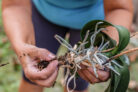
If you suspect overwatering, take the orchid out of its pot immediately. Snip off any mushy, brown roots and repot the plant into fresh, dry orchid bark. Hold off on soaking it for the first few days after repotting to let things settle. After about a week, you should start to see the roots and leaves bouncing back.