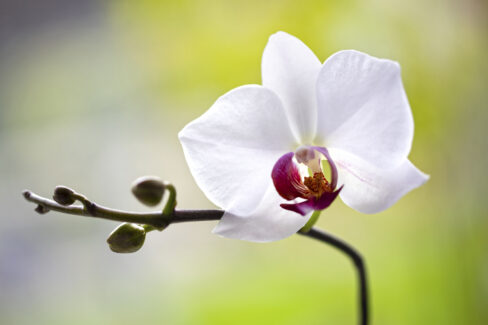
Exotic orchids are famous for putting on a spectacular, long-lasting show of colorful blooms. Multi-stemmed varieties, like the super-popular Phalaenopsis, can even go through several blooming phases in a single growing season. But if your orchid suddenly stops blooming, don’t panic! There are a few common reasons why your plant might be taking a break.
Understanding Different Orchid Types and Bloom Cycles
Not every orchid is going to stay in bloom for months on end. How long those flowers last depends on your home environment and care routine, but also on the specific species you have. Generally, we categorize them into two groups:
- Single-stemmed orchids
- Multi-stemmed orchids
Single-Stemmed Orchids
Single-stemmed orchids produce just one flower per stem. Once that flower fades, you won’t see another one pop up on that same stalk. A great example of this is the Dendrobium, which is a favorite for beginners but follows this “one and done” rule for its stems.
Multi-Stemmed Orchids
Multi-stemmed orchids, like the classic Phalaenopsis (or Moth Orchid), are a bit different. A single flower spike can actually produce new blooms up to three times! You should only cut the spike off once it has completely dried out and turned brown.
Why Your Orchid Might Be Playing Hard to Get
Orchids only show off their true beauty when they’re feeling pampered. Getting the location right is the biggest secret to success. Here’s what to keep in mind:
- They love a bright, warm spot—ideally between 65°F and 77°F (18-25°C).
- They crave humidity! Aim for at least 60% moisture in the air.
- Keep them away from drafty windows or areas with big temperature swings.
- Make sure they’re getting the right nutrients with a regular fertilizing schedule.
If your orchid is in a great spot but still refuses to bloom after a long time, it might need a little extra “nudge” to get moving again.
Time for a Repotting Refresh
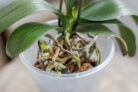
If your orchid has stalled out despite good light and warmth, it might be time to repot it into a fresh pot with new orchid substrate. While you’re at it, give the roots a little spa treatment by trimming them. Snip away any old, dried-out, or mushy roots. Fresh substrate provides a clean environment and a boost of nutrients that can jumpstart growth.
The “Cold Shock” Trick to Trigger Blooms
Sometimes, a little “cold shock” is exactly what an orchid needs to realize it’s time to bloom again. Now, don’t actually freeze your plant! Just move it to a bright spot that is about 10°F cooler than its usual home. During this rest period, cut back on watering—just give the leaves and aerial roots a light misting. Skip the fertilizer entirely for now.
After a few weeks of these cooler nights, your orchid should feel motivated to start growing again. As soon as you see signs of new growth or a flower spike, you can move it back to its warm spot and resume your normal feeding and watering routine.