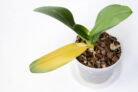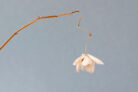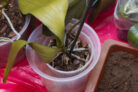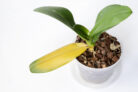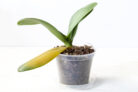
Healthy orchids usually show off several shiny, green leaves. Along with those funky aerial roots, these leaves are the main lifeline for your exotic plant. While it’s totally normal for an orchid to drop an old leaf every now and then, if your plant suddenly goes completely bald, it’s time to do some detective work.
Some Species Drop Leaves Naturally
Believe it or not, some orchids are actually supposed to lose their leaves after their blooming period. This is a natural dormant phase for specific types like:
- Dendrobium
- Calanthe
- Pleione
Why Other Orchids Lose Their Leaves
For most other types—especially the popular Phalaenopsis (Moth Orchid)—losing all its leaves is a major “SOS” signal. Usually, this happens because of:
- A serious lack of light
- Harsh cold drafts
- Standing water (root rot) or extreme dehydration
- Pests or diseases
Can You Save a Leafless Orchid?
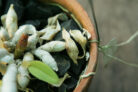
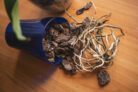
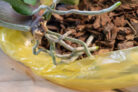
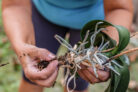
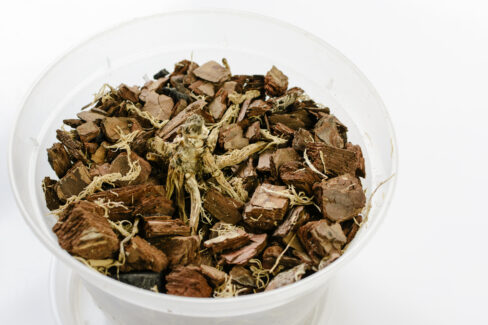
I know, a naked orchid looks pretty sad. But don’t give up on it just yet! The real secret to whether it’ll survive is hidden in the pot. Take a close look at the roots. If you still see some firm, green, or silvery roots, there’s a great chance your plant can bounce back.
However, if all the roots have turned mushy, brown, or totally dried out, the orchid has unfortunately passed away and it’s time to head to the garden center for a new one.
Caring for Your “Bald” Orchid
If there’s still life in those roots, give your orchid some extra TLC. Move it to a warm, bright spot (but avoid direct, scorching sun). Depending on how many roots are left, give them a soak in lukewarm water when they look thirsty. Regular misting of the aerial roots is also a great way to keep humidity up.
You’ll also want to give it a little boost with a nitrogen-rich fertilizer. Pro tip: If there are still green flower spikes or even blooms on the plant, snip them off. It feels painful, I know! But it allows the orchid to put 100% of its energy into growing new leaves, which it needs to survive long-term.
Watch for “Keikis”
Sometimes, when an orchid feels like it’s on its last legs, it’ll make one final push to keep its legacy alive by growing offshoots, known as “keikis.” These are genetically identical baby plants. It’s the orchid’s way of saying, “I might be going, but here’s a mini-me to take my place!”