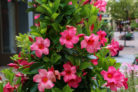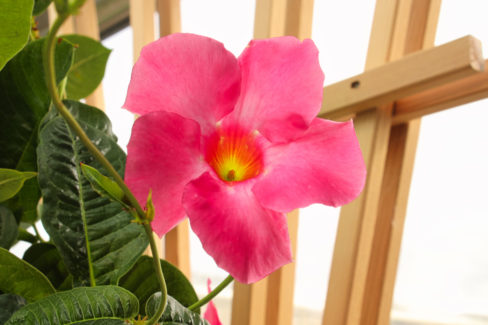
Since Dipladenia (also known as Mandevilla) thinks anything below 45°F is absolutely freezing, bringing her indoors for the winter is a must. To keep her happy, you’ll want to end her outdoor vacation well before the first frost hits.
Overwintering
Because these beauties are super sensitive to the cold, finding a frost-free spot for them to ride out the winter is non-negotiable.
Temperature
You’ll want to keep your winter storage area at a steady 45°F to 55°F. One pro tip: make sure that temperature is consistent from the air down to the floor. If the pot sits on a freezing cold floor, the roots won’t be able to pull up enough water, even if the air is warm. This leads to the leaves drying out because they’re evaporating moisture faster than the roots can replace it.
Also, Dipladenia is “terrified” of cold drafts. To her, a chilly breeze feels like a threat, so avoid placing her near any windows you plan on opening for fresh air during the winter.
Lighting
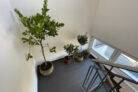
Along with warmth, Mandevilla craves plenty of light during her winter nap. Ideally, she should get some morning or evening sun. Depending on where you have the best combo of light and warmth, great spots include:
- A bright stairwell
- A sunroom or conservatory
- A basement set up for overwintering.
Pruning
Usually, you’ll want to prune back those Mandevilla vines in the spring right before the new growth starts. However, if you’re tight on space for a Dipladenia pyramid, you can definitely trim her back before moving her inside. This also goes for plants that spent the summer climbing up a trellis—feel free to cut those back by up to two-thirds.
If you do your heavy pruning in the fall, you can skip the spring trim. The only exception is if you spot pests moving in; in that case, go ahead and prune during the winter to help get the infestation under control.
Care
To make sure your Mandevilla gets the “beauty sleep” she needs during her winter dormancy, you’ll need to scale back the TLC:
- Stop fertilizing by mid-August.
- Water only occasionally—just enough so the soil never completely dries out.