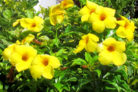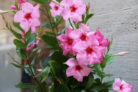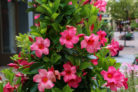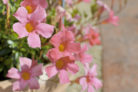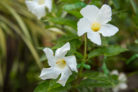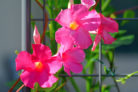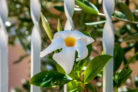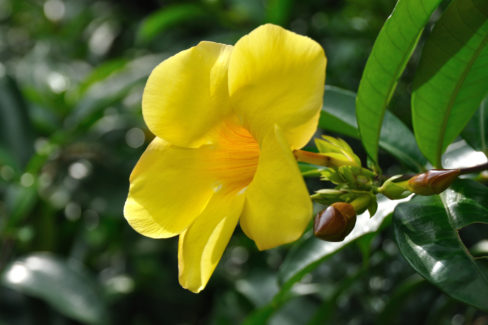
Generally speaking, if your Dipladenia (Mandevilla) is happy and healthy, it’s pretty tough against pests. But don’t let your guard down! It’s always a good idea to give your plants a quick once-over regularly, because once aphids or mites move in, they can take over the whole plant before you know it.
Common Pests
Since Dipladenia isn’t cold-hardy, most of us grow them in pots so we can bring them inside for the winter. Because they spend time as container plants or houseplants, they’re susceptible to the usual suspects that love indoor environments:
- Aphids
- Mealybugs
- Whiteflies
- Spider mites
It’s often a mystery where these little guys come from, but since they multiply like crazy and love to jump to neighboring plants, your first move should always be to isolate the infested plant. Also, don’t be afraid to give the plant a good, hard pruning to get rid of the worst spots.
Aphids
- Specifically the Glasshouse-Potato Aphid (Aulacorthum solani)
What they look like:
- Size: Up to 1/8 inch (3 mm) long
- Color: Yellowish, pale green, or bright green; often with dark green or reddish-brown spots
Symptoms and Damage:
- Found both indoors and outdoors.
- They love young shoots, old stems, and everything in between.
- You’ll see yellow spots or stunted, deformed growth (caused by their toxic saliva).
- They leave behind sticky “honeydew,” which can lead to sooty mold (a grayish-black coating on the leaves).
How to fight back:
- Beneficial bugs: Ladybugs, lacewing larvae, and parasitic wasps are your best friends here.
- Home remedies: For a mild case, try a spray made of insecticidal soap or a stinging nettle tea.
- Last resort: Commercial insecticides.
Mealybugs
- Specifically the Citrus Mealybug (Planococcus citri)
What they look like:
- Size: Up to 1/5 inch (5 mm) long
- Color: White and fuzzy (thanks to a waxy coating)
Symptoms and Damage:
- Mostly an indoor problem.
- They hide along leaf veins on the undersides of leaves and in the leaf axils.
- Look for yellowing leaves that eventually start to wilt.
How to fight back:
- Beneficial bugs: Parasitic wasps.
- Insecticides: These can be effective if caught early.
- Pro tip: If your Mandevilla has already started wilting significantly, it might be too late to save it.
Whiteflies
- A general term for various species of Aleyrodoidea
What they look like:
- Size: Tiny, only about 1/16 inch (1.5 mm) long
- Color: White and powdery
Symptoms and Damage:
- Mostly found indoors or in greenhouses.
- You’ll spot tiny white eggs (looking like white dots) on the undersides of leaves.
- Like aphids, they excrete sticky honeydew.
How to fight back:
- Beneficial bugs: Parasitic wasps love to snack on the larvae.
- Yellow sticky traps: These are great for catching the flying adults.
Spider Mites (Tetranycidae)
What they look like:
- Size: Microscopic, up to 0.03 inches (0.8 mm)
- Color: Yellowish, green, orange, or reddish (often called “Red Spiders”)
Symptoms and Damage:
- Common both outdoors and during indoor overwintering.
- They attack leaves and flowers.
- Look for tiny white or yellow speckles on the leaves or leaves that look dried out.
- The giveaway: Fine, silky webbing on the leaves, stems, and blooms.
How to fight back:
- Beneficial bugs: Predatory mites.
- The “Humidity Trick”: Mist the plant thoroughly with water and wrap it in a clear plastic bag for a few days. The high humidity is a death sentence for spider mites!