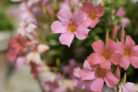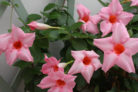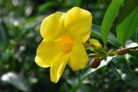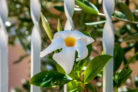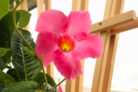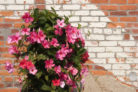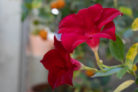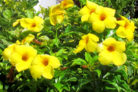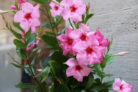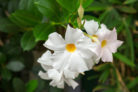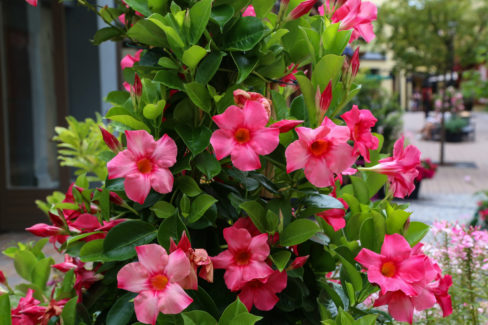
Mandevilla (often still called Dipladenia) is easily one of the most popular patio plants around here, and for good reason—those vibrant, trumpet-shaped blooms are total showstoppers. The best part? Most varieties share a similar blooming schedule, so you can mix and match different colors in the same pot for a stunning display.
- The Blooming Season
Because Mandevilla puts on such a long show, it’s widely considered a “continuous bloomer.” You’ll often hear that it blooms for six to seven months, or “from spring until the first frost.” While that sounds amazing, those expectations come with a bit of a reality check. How long your plant actually stays in bloom depends on two main things:
- Warmth
- The plant’s own growth cycle
- Factor 1: Warmth
Mandevillas are sun-worshippers; they need plenty of light and heat to produce those gorgeous flowers. That’s why your Mandevilla should definitely spend its summer at a sunny outdoor spot. However, these plants are total “cold-phobes.” To a Mandevilla, anything below 46°F (+8°C) feels like winter. In many regions, this means the outdoor season can’t really start until after the last spring frost (usually mid-May). So, if you see a label promising blooms in “early spring,” take it with a grain of salt—it all depends on your local climate.
What about the “until the first frost” claim? Again, keep that sensitivity to cold in mind. Since the plant starts struggling once temperatures dip toward 45°F, expecting it to bloom right up until the first frost isn’t very realistic. Usually, temperatures drop gradually in the fall, so for most of us, the blooming season will wind down around September or October.
- Factor 2: The Plant Itself
Beyond just the weather, you have to consider how the plant grows. Mandevilla doesn’t usually explode with flowers overnight; it starts off slow. Once the nighttime temperatures stay consistently in the double digits (Celsius) or well above 50°F, the blooming picks up speed. You can usually expect the full, lush display to kick in around June and last all through the heat of summer.
If you have a perennial plant that you overwintered indoors, keep in mind that its “wake-up phase” might take a little longer. These plants often don’t really get going until June, meaning the peak flower power might show up a bit later in the season compared to greenhouse-grown plants from the garden center.