Ever stumbled upon a pear tree with fruit so delicious you wished you could replicate it exactly? Well, you’re in luck! If you’ve found a “keeper” variety, you can take a cutting (called a scion) and graft it onto a rootstock. Here is a quick guide on how to get it done.
What Exactly is Grafting?
Grafting is a classic plant propagation technique. Essentially, you’re taking a “scion”—which is just a fancy word for a one-year-old branch from your favorite pear tree—and joining it to another tree, known as the rootstock. This little twig, only a few inches long, eventually fuses with the host tree.
Grafting is a total game-changer if you only have space for one tree but want to ensure good pollination . By grafting different varieties onto a single trunk, you can create a “multi-variety” tree. The best time to head out and start grafting is usually in April or May.
Two Popular Grafting Methods
When it comes to pears, there are two main ways to go about it:
- Cleft Grafting
- Bark Grafting
Cleft Grafting
Cleft grafting works best when your scion and the host branch are roughly the same thickness. Start by pruning a suitable branch on your tree with a clean, straight cut. Use a tool to carefully split the remaining branch right down the middle.
Next, grab your scion and shave the end into a sharp wedge shape. Slide that wedge right into the split you made. If it’s a tight fit, you can use a screwdriver or a knife to gently pry the gap open while you slide the scion in. To finish up, wrap the graft site tightly with grafting tape and seal the whole wound with grafting wax or paraffin to keep it from drying out.
Bark Grafting
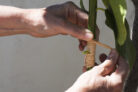
The cool thing about bark grafting is that you can actually tuck several scions into one spot. For this method, choose a slightly thicker branch—about 1.5 to 3 inches in diameter—and cut it straight across. Prepare your scions by cutting them into a wedge shape on one side.
On the host branch, make one or two vertical slits through the bark, starting from the top and moving downward. Gently peel the bark back just enough to create a little pocket. Slide your scion under the bark, leaving about 1/4 inch of the cut surface visible above the edge of the branch. Just like with the cleft graft, wrap it firmly with raffia or grafting tape and seal everything—especially the exposed cut surfaces—with wax.
Pro Tip: You’ll want to collect your scions while the trees are still dormant. The best time to snip them is in the winter, through mid-February. Keep them in a cool spot (around 40-43°F) tucked into some damp sand until you’re ready to graft in the spring.