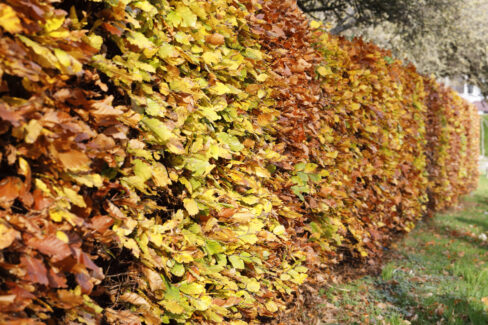
Copper beeches make for an absolutely stunning hedge. With that deep, moody purple foliage, they create a privacy screen that really stands out in any backyard. But if you want your copper beech hedge to look professional and grow straight, you’ve got to do a little homework first. Here are my top tips for getting it right from day one.
Getting Your Ducks in a Row
Before you start digging, you need to map out exactly where that hedge is going. To make sure your line is perfectly straight, don’t eyeball it—stretch a piece of string along the entire planned path. It’s the only way to guarantee your hedge won’t look wavy later on.
Also, a quick pro tip: check in with your local town hall or HOA about property line setbacks. The last thing you want is to have to dig up and move established trees because they’re too close to the neighbor’s fence—that kind of stress can really damage the roots.
Here are a few other things to keep in mind:
- The Right Spot:
Copper beeches love the sun! They’ll grow fastest and stay healthiest in full sun to partial shade. They can handle full shade if they have to, but they won’t be quite as vibrant.
- Timing is Everything:
Get your hedge in the ground during the spring. March or April is the sweet spot for planting.
- Soil Quality:
These trees need well-draining soil—they hate “wet feet,” so avoid areas where water pools. If your soil is heavy clay, definitely add some drainage. They prefer soil that is slightly alkaline (limy) and consistently moist.
Keep in mind that since copper beeches are fast growers, they’re pretty hungry for nutrients!
- Spacing:
Because they grow so quickly, you don’t want to crowd them. Aim for about 20 inches (50 cm) between each plant. Usually, three trees per yard (meter) is the perfect density for a thick hedge.
How to Plant Your Hedge
When you’re ready to get your hands dirty and start planting, just follow these steps:
- Dig a hole that’s plenty deep for the root ball.
- Toss the extra soil into a wheelbarrow for easy mixing.
- Add a layer of drainage material (like gravel) at the bottom of the hole.
- Set your copper beech right in the center.
- Mix some organic compost into the soil you set aside in the wheelbarrow.
- Fill the hole back up and tamp the soil down firmly with your foot to remove air pockets.
- Give it a good soak and add a support stake to keep it steady.
Once they’re in the ground, it’s time for a quick trim. I know it feels counterintuitive to cut a new plant, but pruning back any shoots that haven’t started branching out yet will actually encourage the hedge to grow in thick and lush!