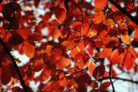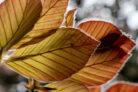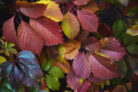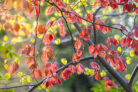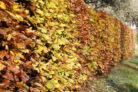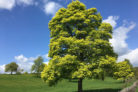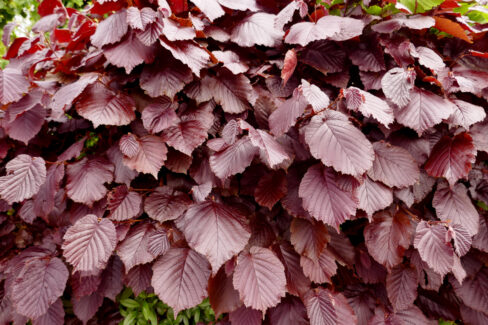
You’ll usually spot Copper Beeches (also known as Purple Beeches) making a bold statement in large parks or estates. Their deep red foliage is a total showstopper, especially when it shifts into a stunning, one-of-a-kind orange in the fall. If you’re looking for a decorative highlight that really pops against a sea of green, this tree is definitely a top contender.
Copper Beeches rock red leaves all year long
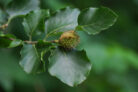
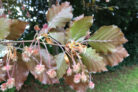
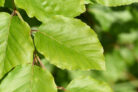
The coolest thing about the Purple Beech is that its foliage keeps that reddish tint throughout the entire growing season. While the shape of Copper Beech leaves is pretty similar to other beech varieties, they have some very distinct features:
- The leaves are oval-shaped with a short stem.
- They have pointed tips and slightly wavy, toothed edges.
- When they first bud in spring, they look reddish-brown or even a greenish-red.
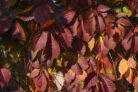
- Come autumn, the canopy turns a brilliant orange.
- Just before they drop for the winter, they often fade back to a muted green.
Since the Purple Beech is a deciduous tree, it loses its leaves every winter. To keep yours looking sharp and maintaining that gorgeous ornamental shape, I recommend regular pruning.
A “glitch” in nature creates that deep red color
Wondering why they’re so red? It’s actually a fascinating quirk of nature! These leaves contain a high concentration of a red pigment called cyanidin. This pigment is so dominant that it almost completely masks the green chlorophyll we see in most other trees.
Watch the colors shift through the seasons
In the spring, the new growth emerges in that classic red tone. Depending on the specific tree, this can range from a dark, moody burgundy to a brighter greenish-red. By autumn—usually peaking around mid-November—the foliage puts on a spectacular show of fiery orange-red. After this final burst of color, the leaves turn green and eventually fall off.
How to spot pests by looking at the leaves
It’s totally normal for Purple Beech leaves to curl up in the fall right before they drop. However, if you notice the leaves curling and drying out earlier in the season, you might have some uninvited guests. Pests or diseases are usually the culprits, with aphids being the most common troublemakers.
If your tree is planted in the right spot or you have a well-maintained hedge, a few bugs won’t do much damage. But if your Copper Beech is already looking a bit stressed, you’ll want to step in. You can find specialized treatments at your local garden center—most of which are best applied during the winter months to get things back on track.