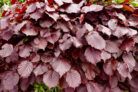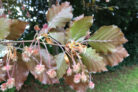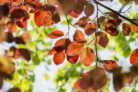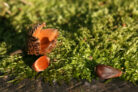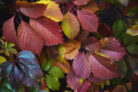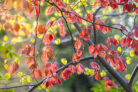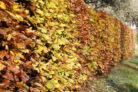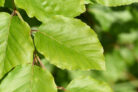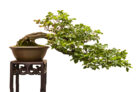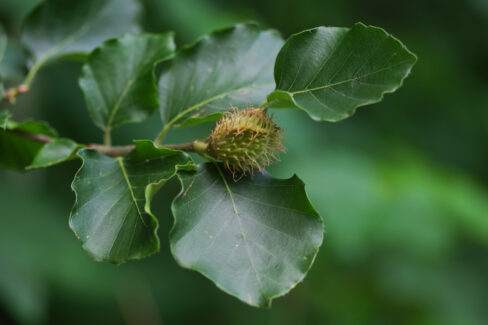
The Copper Beech (also known as the Purple Beech) is a stunning member of the beech family. If you look closely, it’s almost identical to the standard European Beech—with one very obvious exception: those gorgeous, deep red leaves.
European Beech vs. Copper Beech
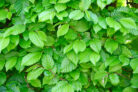
Here’s a fun fact: the standard European Beech (*Fagus sylvatica*) isn’t named for its leaves, which are actually green. It gets its name from its slightly reddish wood and its buds, which have a subtle red tint when they first emerge.
The Copper Beech also sports that reddish wood and those tinted buds, but it takes things a step further. When the leaves unfurl, they are a striking blood-red. Depending on the specific tree, you might even see shades ranging from deep brownish-red to a unique reddish-green mix.
* Why are Copper Beech leaves red?
It all comes down to chemistry! Copper Beech leaves contain a red pigment called cyanidin, which masks the green chlorophyll we see in other trees. Experts believe this color difference originally happened because of a lucky natural mutation. If you’re a keen observer, you’ll notice that the red color often fades slightly as the season goes on, a process sometimes called “greening.” This usually happens more quickly on leaves hidden in the shade compared to those soaking up the full sun.
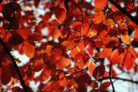
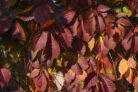
When autumn rolls around, both types of beech put on the same spectacular show. They turn a brilliant, glowing orange-red that looks absolutely breathtaking in the November light.
Care and Maintenance
When it comes to yard work and maintenance, these two are twins. You won’t find any difference in:
- Maximum size (both can reach about 100 feet)
- Lifespan (around 200 years, often much longer)
- Growth rate
- Fruit (beech nuts)
- Flowering time
The only real choice you have to make is which leaf color you prefer for your landscape!
Where did the Copper Beech come from?
The Copper Beech (scientifically known as *Fagus sylvatica f. atro-punicea*) has been known since at least the 15th century. The “mother” of all Copper Beeches was found in the Possenwald forest near Sondershausen, Germany. Legend has it that the local Prince of Schwarzburg-Sondershausen discovered the original tree along with 11 “sisters” growing nearby. He began cultivating them, and soon, this unique variety became a worldwide sensation. Interest exploded, and today you can find Copper Beeches anywhere the standard European Beech grows. One famous specimen was even planted in London’s Hyde Park, helping the species gain popularity across the globe.