Parsley plants really value their personal space! To grow big and lush, every single plant needs plenty of room to breathe. However, if you’ve ever tried sowing parsley, you know it rarely looks organized at first. Those seeds are tiny, making it super tricky to spread them out evenly. That’s where “pricking out” (or thinning) comes in.
Avoid Overcrowding from the Start
Every time you move or “prick out” a seedling, it causes a bit of stress and temporarily slows down its growth. Ideally, you want to sow thinly enough so the plants can stay right where they sprouted. A pro tip for handling those microscopic seeds? Mix them with a handful of fine sand before sowing. It makes them much easier to scatter evenly.
You can also try a little “companion planting” trick by mixing in some radish seeds. Unlike parsley, radishes germinate lightning-fast, acting as natural row markers so you know exactly where you planted. By the time the parsley starts needing more elbow room, the radishes are ready to harvest and head to your kitchen!
How to Prick Out Young Seedlings
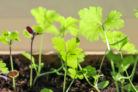
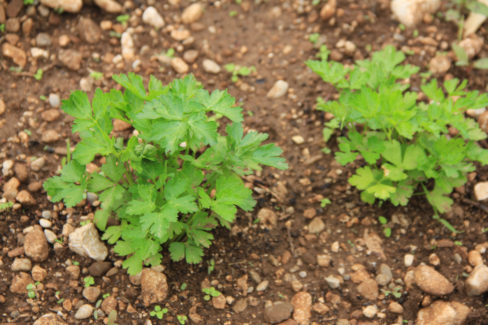
Parsley is a slow starter—germination usually takes anywhere from four to six weeks. You can speed things up a bit by starting them indoors in the warmth or soaking the seeds in warm water before planting. Even so, it’ll be several weeks before they’re ready to be moved. Wait until the seedlings are about 2 inches (5 cm) tall; at that point, they’re strong enough to handle a transplant.
Choose a spot with partial shade and rich, lime-heavy, moist soil. Just a heads-up: don’t plant parsley where other umbellifers (like carrots or dill) have grown in the last four years, or your parsley might struggle to grow.
- Fix up poor soil before planting by adding sand, compost, or lime.
- Aim for about 4 inches (10 cm) between plants.
- Leave 6 inches (15 cm) between rows.
- Keep about 8 inches (20 cm) of space from other types of plants.
Thinning Out: The Easy Alternative
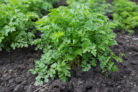
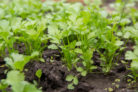
Since parsley seeds are pretty cheap, you don’t always have to transplant the extras. You can simply “thin them out.” Look for the strongest, healthiest seedlings and keep those, pulling out the weaker ones nearby until you have roughly the right spacing. You don’t need a ruler—just give them enough room to get bushy!
Sowing and Pricking Out in Pots
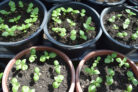
Because not every seed is guaranteed to sprout, I usually drop about 5 or 6 seeds into each pot. Once they hit that 2-inch (5 cm) mark, pick the strongest one to keep and move the others to their own pots (or compost them). If you started your parsley indoors, wait until they are about 3 inches (7 cm) tall before moving them out to the garden.
Quick Tip:
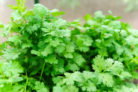
Flat-leaf and curly parsley aren’t just different to look at—they taste different, too! If you’re looking for a big punch of flavor in your cooking, go ahead and sow the flat-leaf varieties.