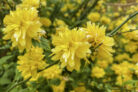
The Japanese Rose (Kerria japonica) is a real standout among early bloomers. In the spring, its long, arching branches are covered in countless lush, bright yellow flowers that practically glow. Whether you plant it as a centerpiece or a flowering hedge, it’s a total showstopper in any garden. And the best part? It’s incredibly easy to propagate, so you can spread that cheerful spring yellow all over your yard!
Propagation Methods
When it comes to growing new Japanese Rose bushes, you’ve got a few different options. They’re all pretty reliable, so you can pick the one that works best for you:
- Growing from cuttings
- Using root suckers (runners)
- Starting from seed
- Letting nature do the work
Cuttings
During the summer, once the first big bloom of the season is over, it’s time for a little pruning. This leaves you with plenty of young shoots that are perfect for propagation. Just strip the leaves off the bottom third of a cutting and stick it straight into some potting soil. Keep the soil consistently moist to help those roots take hold quickly. If you’re like me and love watching the magic happen, you can also pop the cutting into a glass of water. You’ll usually see roots forming within about four weeks, and then it’s ready to be potted up.
Root Suckers and Natural Spreading
The Japanese Rose is a vigorous grower and sends out plenty of root suckers during the growing season to expand its footprint. If you’ve got the space, you can just let the shrub do its thing and it will multiply all on its own.
However, if you installed a root barrier when you planted it, you can keep things a bit more controlled. Any suckers that try to sneak past the barrier can be cut off and used to start new plants exactly where you want them. Just sever the runner, transplant it to its new home, and keep the soil moist. In a few weeks, you’ll see new growth popping up.
Growing from Seed
If you’ve gathered seeds from your Japanese Rose, you can definitely try your hand at starting them from scratch. Just a heads-up: this method takes a bit of patience! Here’s the game plan:
- Sow the seeds in a planting tray.
- Cover them with a very thin layer of soil.
- Keep the tray in a bright, warm spot for about three months.
- Make sure the soil stays moist the whole time.
- Next, the seeds need a “cold snap” (stratification). Put the tray in the fridge or out on a cold balcony for two months.
- After that, bring them back into the warmth to kickstart germination.
Wait until spring to move your young plants outdoors or into permanent pots. They’ll be happiest in a partially shaded spot that’s protected from harsh winds.