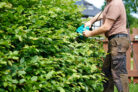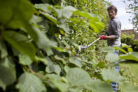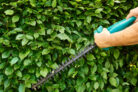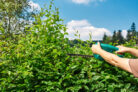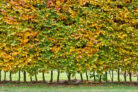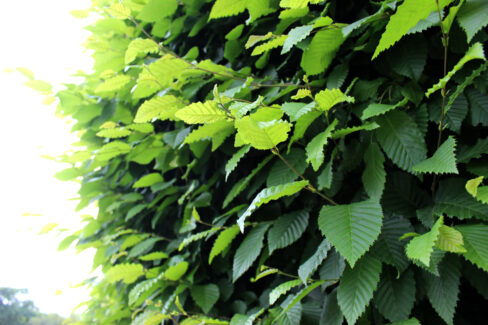
A beech hedge can be a loyal companion in your garden for decades—after all, these trees can live to be around 150 years old! But let’s be real: after a few decades, even the most beautiful hedge can start looking a little tired. The growth gets sparse, and it loses that lush, dense look we love. If your hedge is starting to look a bit “leggy,” it’s time to grab your shears and give it a proper rejuvenation prune. Here’s how to get your beech hedge looking brand new again.
Why Fall or Winter is the Best Time to Prune
The longer your hedge stands, the more complex its network of branches becomes. Over time, you end up with a dense thicket of tangled twigs that blocks sunlight from reaching the inner and lower sections. When that happens, the bottom of the hedge starts to go bald because no new leaves or branches can grow in the dark.
A rejuvenation cut thins out that dense mess, letting light and air circulate freely again. Not only does this make the hedge look better, but it also boosts overall plant health and helps ward off pests. Plus, if your hedge has gotten a little too tall for your liking, this is the perfect chance to bring it back down to earth.
How to Prune Your Beech Hedge the Right Way
The best window for giving your beech hedge a makeover is between October and early March. Ideally, you want to get out there just before the new buds start to pop in early spring.
Keep in mind that from March through the end of June, you should avoid any radical pruning. We want to leave the birds alone during their nesting season!
Here’s your step-by-step guide to a successful trim:
- Always start with sharp, clean pruning shears or loppers.
- Trim the sides of the hedge first.
- Next, cut back the top to your desired height.
- Carefully thin out those thick, old woody branches. This is the secret to long-term rejuvenation.
- Finish by removing any dead or weak wood, leaving only the healthiest branches.
Fair warning: your hedge might look a little “plucked” or bare right after you’re finished. Don’t panic! Beech trees are incredibly resilient and grow surprisingly fast. After a heavy pruning, they just need a little time to bounce back. Give it one growing season, and your hedge will look thicker and healthier than it has in years.
Pro tip: Make sure you have high-quality tools on hand. Old beech wood can be surprisingly thick and tough to cut through!
The good news? Beech trees are very forgiving when it comes to pruning. They can handle a major cut—even back to the old wood—and still come back stronger than ever.