To keep your beech hedge looking lush and acting as a solid privacy or wind screen, regular pruning is a must. Believe it or not, the maintenance starts the very day you put them in the ground and stays on the annual to-do list from then on. My step-by-step guide will walk you through exactly how and when to give your hedge a haircut.
When is the Best Time to Prune?
When picking a date to head out with your shears, you’ve got to keep local regulations in mind. Any heavy rejuvenation or major structural pruning should really only happen during the winter or very early spring.
Wildlife protection laws are pretty specific about protecting nesting birds and other critters. Because of this, from March through the end of September, you should only perform light “maintenance trims.” These quick touch-ups focus on the new year’s growth and are just meant to keep things looking tidy.
The window for heavy-duty pruning is between October and late February. Even then, always do a quick double-check to make sure no local wildlife has moved into your hedge for the winter before you start cutting.
The Initial Planting Cut – Step-by-Step
The absolute best time to plant your beeches is in early autumn. You’ll find plenty of varieties at nurseries this time of year, and bare-root young beeches are incredibly budget-friendly—sometimes costing as little as a dollar or two per plant.
Beeches planted in September have just enough time to get their roots established before the first hard frost hits.
Here’s how to handle that first planting cut:
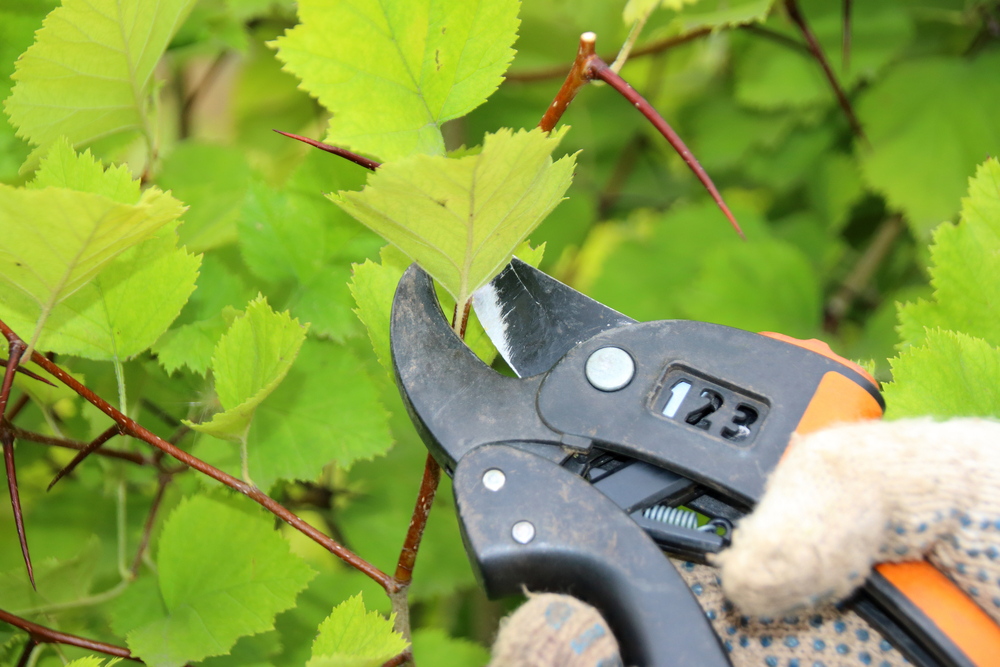
- Grab a pair of sharp, clean bypass pruners.
- Shorten any unbranched shoots by about half.
- Completely remove any broken or sickly-looking twigs, or cut them back until you hit healthy wood.
If you’re starting a beech hedge for the first time, it can feel a little scary to cut back those tiny saplings so aggressively on day one. Trust me, though—don’t skip it! This initial cut is the secret to healthy, dense growth and helps the plants build up resistance against pests.
Hedge Pruning – Prep and Pro-Tips
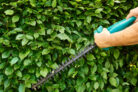
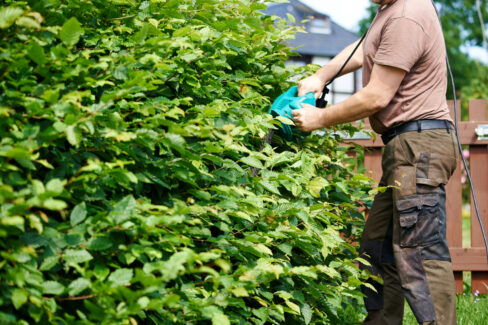
For a major rejuvenation project, an electric hedge trimmer is your best friend. If your hedge is longer than 30 feet, you might want to consider a gas-powered model for the extra oomph.
Manual shears work too, of course, but be prepared for a serious workout!
How to prep for the job:
- First, check that all safety features on your electric or gas trimmer are working correctly, then give the blades a good cleaning.
- If using manual shears, make sure they are razor-sharp and disinfect the blades with rubbing alcohol.
- Don’t forget your safety gear—put on your gloves and eye protection.
Dirty tools are one of the biggest culprits behind fungal infections and aphid infestations. Disinfecting your blades ensures you aren’t accidentally inviting pathogens into your garden.
Training Your Hedge – Tips and Instructions
Beeches can grow about 20 inches a year. To make sure your hedge develops the right look, a “training cut” in late winter is essential.
Until your hedge reaches its goal height, you should prune it into a conical (tapered) shape. This means a narrower top and a wider base.
This “A-shape” allows the bottom leaves to get plenty of sunlight, which prevents the bottom of the hedge from going bald and woody.
Pro tip: Lightly mist your trees with water before you start. Wet leaves and twigs create less dust and actually help keep your blades sharper during the process.
How to master the training cut:
- Use stakes and string as a guide to keep your lines straight.
- Mark both the base and the top with your string line.
- The taller the hedge, the wider the base should be.
- Trim the sides following this tapered pattern.
Train your hedge in stages. Each time you prune, leave about 4 inches of the new growth untouched. This technique slows down the vertical sap flow and redirects that energy into the side branches, making the hedge thicker.
To get a 6-foot hedge to be completely “neighbor-proof” (opaque), you should aim to prune twice a year during this training phase.
Heavy Pruning – How to Shape Your Hedge
Most gardeners recommend doing your main shaping in early spring. A good trim in February encourages the hedge to grow back thicker and more evenly.
Since the sap isn’t fully flowing yet, the trees handle a heavy cut without any stress. Because of the natural recovery phase, new growth won’t really kick in until May, meaning your hedge will look perfectly manicured and tidy for quite a while.
How to get the perfect shape:
- Use your string lines to maintain that trapezoid/tapered shape.
- Keep the trimmer blades parallel to the sides of the hedge. Always move the trimmer from the bottom upward.
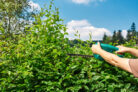
- For the top of the hedge, hold the blades horizontally and use a wide, sweeping motion from left to right.
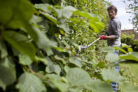
- Position yourself so you’re always looking at the un-cut section. Keep your arms steady to ensure a smooth, professional finish.