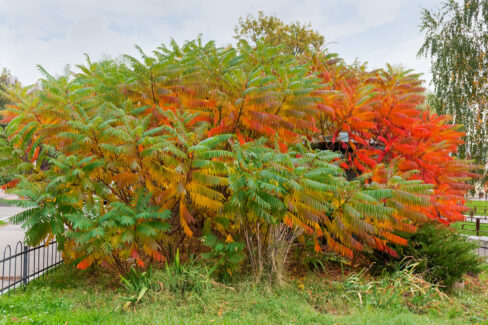
Don’t get me wrong—the Staghorn Sumac (*Rhus typhina*) is an absolute showstopper when its leaves turn those brilliant fiery colors in the fall. But for many backyard gardeners, this beauty quickly turns into a beast. Before you know it, what started as a lovely focal point has taken over the whole yard, leaving you wondering how to get rid of it for good. Trust me, it’s a bit of a project, but it can be done!
The Problem with Sumac Growth
If you don’t stay on top of those little shoots (suckers) that pop up from the creeping root system, your single shrub will transform into a dense thicket in no time. It’s not just the mess of branches above ground that’s the issue; it’s the massive network of roots underneath. The bigger the plant gets, the harder it is to fight back because you’re no longer dealing with one tree—you’re dealing with an entire army of them.
How to Remove It
To completely clear out your Staghorn Sumac (and I know some of you are at the “total eradication” stage!), you need to follow a three-step game plan:
- Fell the main trunk
- Remove the stump and the root network
- The “fine-tuning” cleanup
Felling the Trunk
The first step is the easiest part: cutting the tree down. Here’s a pro tip, though: don’t cut it flush to the ground yet. Aim to cut the trunk at a height of about 5 to 6 feet (150 to 180 cm). Leaving that tall “handle” will give you much better leverage for the next step.
Removing the Stump and Roots
Now for the heavy lifting. The goal here is to get every bit of the underground system, including all those runners and suckers. You’ll want to start with the main stump. To get it out manually, you’d have to dig incredibly deep—sometimes several feet down.
Honestly? Your best bet is to rent a mini-excavator. That 5-to-6-foot trunk you left earlier acts as a lever, making it much easier for the machine to pop the root ball right out of the earth. Once the main stump is out, use the excavator to clear the lateral roots. You’ll need to dig down at least 12 inches (30 cm) across the area to find them all.
The Cleanup
Once the heavy machinery is parked, it’s time for the “fine-tuning.” This is the most important part if you want to win the war. You have to sift through the soil and remove every single piece of root you can find. Even a tiny fragment left behind can sprout a brand-new tree, so being thorough now saves you a lot of headaches later!