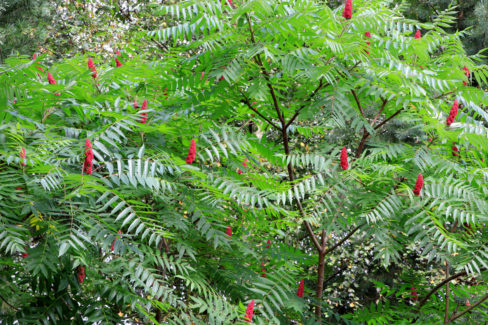
Staghorn sumac (botanical name *Rhus typhina*) is definitely one of those “fast and furious” growers. While that speed is a total blessing when you’re waiting for those gorgeous fall colors to kick in, it can become a bit of a headache underground. If you aren’t careful, its root suckers can take over your yard before you know it!
Above Ground
In its native habitat across Eastern Canada and the United States, a happy staghorn sumac can tower up to 40 feet tall. However, in most garden settings, this deciduous shrub stays a bit more manageable, usually topping out between 10 and 20 feet (rarely hitting 23 feet) in both height and width.
During its first decade or so, you can expect it to shoot up about 12 to 16 inches per year. Once it hits that 10-to-12-year mark, the growth usually starts to level off.
Varieties
If you’re looking at specific cultivars, the growth rates vary a bit:
Rhus typhina “Dissecta” and “Laciniata” (Cutleaf Sumac)
- Height: 8 to 13 feet
- Width: 15 to 25 feet
- Growth rate: 6 to 12 inches per year
Rhus typhina “Tiger Eyes”
- Height: 5 to 6.5 feet
- Width: 6.5 to 10 feet
- Growth rate: 4 to 12 inches per year
Growth Habit
The staghorn sumac typically grows as a multi-stemmed shrub with a lovely, wide-spreading crown. The main trunk stays relatively short, usually reaching a maximum diameter of about 14 inches at chest height.
Foliage
The leaves of the *Rhus typhina* are pretty impressive. They consist of a 2-to-4-inch stem and a blade made up of 9 to 31 leaflets. Each individual leaflet is about 3 to 5 inches long and maybe an inch wide. All told, a single leaf can measure anywhere from 8 to 24 inches long!
Blooms
The tiny individual flowers cluster together in cone-shaped panicles. The male panicles are the showier ones, reaching about 8 to 10 inches long, while the female clusters are usually about a third smaller.
Below Ground
Even though staghorn sumac is considered a shallow-rooted plant, its main structural roots can actually reach depths of 6 to 10 feet. Because the root system spreads out several yards wide, you’ll want to give it at least 10 feet of “personal space” from neighboring plants.
Fair warning: if you plant a sumac without a root barrier, it’ll likely start running wild after two or three years. Those root suckers are ambitious—they can send up new shoots as far as 30 feet away from the main plant!