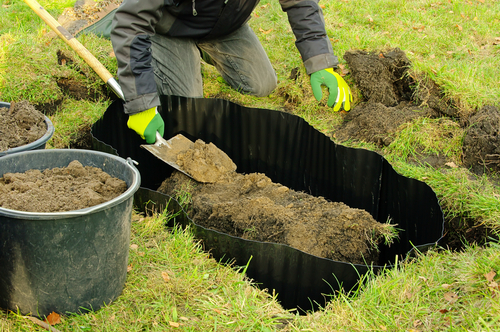
The Staghorn Sumac (botanical name *Rhus typhina*) is a super easy-going shrub that puts on a spectacular show with its fiery fall colors. But here’s the catch: it has a serious case of wanderlust. This plant loves to spread, and if you don’t keep it in check, it’ll take over your yard before you know it. The best way to keep it contained is by installing a root barrier.
Why do you need one?
The Staghorn Sumac spreads through underground runners called rhizomes. Instead of growing straight down, these stems creep horizontally just under the surface. The headache for gardeners is that every one of those runners can sprout a brand-new sumac tree. By its second or third year, a single shrub can send up as many as 40 suckers! Without a barrier, you’ll quickly find yourself with an accidental “sumac forest” that smothers everything else in your garden.
Installing a root barrier (or rhizome barrier) stops this aggressive spreading by physically locking those runners in place.
How to install a root barrier
To really get the job done, you need to put the barrier in *before* you plant your sumac. Trying to install one later usually doesn’t work well because the runners have likely already started their growth journey across your lawn.
The Right Materials
Since we’re dealing with a root barrier film, you have to be picky about the material. Sumac runners are surprisingly powerful—they can actually punch right through standard pond liners!
For a Staghorn Sumac, your best bet is a High-Density Polyethylene (HDPE) liner that is at least 2mm thick. HDPE is the gold standard for rhizome barriers because it’s:
- UV-resistant
- Frost-resistant (it won’t get brittle or crack in the winter)
- Rodent-resistant (critters can’t chew through it)
In addition to the liner, you’ll need an aluminum closure strip, some screws, and a drill to make sure the seal is tight.
Step-by-Step Instructions
For the barrier to do its job, it needs to completely encircle the sumac’s root zone. Here are the dimensions you’re looking for:
- A diameter of about 6.5 feet (200 centimeters)
- A depth of 16 to 24 inches (40 to 60 centimeters)
Make sure the barrier sticks up an inch or two above the soil line; this prevents runners from simply “jumping” over the top. When you wrap the liner around, overlap the ends by at least four inches. Once it’s positioned, secure that overlap with your aluminum strip by:
- Drilling two pilot holes
- Screwing the strip firmly into place
Once your “security perimeter” is set, you can fill the hole with soil and get your sumac planted. Now you can enjoy those gorgeous red leaves without the stress of a backyard invasion!