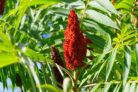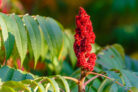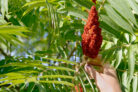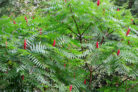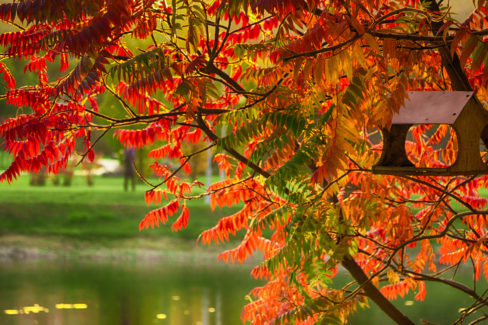
The Staghorn Sumac (botanical name: *Rhus typhina*) is one of those ornamental shrubs that naturally grows into a gorgeous, umbrella-like canopy when it’s happy in its spot. Because it has such a great natural shape, pruning is usually the exception rather than the rule.
Why Prune at All?
Unlike many other shrubs in your garden, the Staghorn Sumac doesn’t actually need a regular “haircut” or shaping. In fact, if you prune it back too hard, it tends to go a bit wild. It often sprouts up to three new shoots from every single cut, which can quickly ruin that elegant, natural silhouette we love.
That being said, there are a few situations where you might need to grab your loppers. These include:
- Thinning it out
- Dealing with “legginess” (bare spots)
- Space constraints
Thinning Out
Thinning is all about letting some light back into the center of the plant. To keep your sumac healthy and airy, go ahead and remove branches that are:
- Growing inward toward the trunk
- Dried out or stunted
- Crossing over and rubbing against each other
A good rule of thumb is to aim for about 8 inches (20 cm) of space between individual branches after you’re done thinning.
Dealing with Legginess
If your sumac is looking “leggy,” it means the bottom and interior are just bare wood while all the leaves are bunched at the very top. This happens when the shrub sends all its energy to the highest tips. To balance out this growth, you should trim back:
- Extra-long shoots
- Any dead, dried-out, or weak branches
Space Constraints
If your Staghorn Sumac has simply outgrown its welcome—whether it’s getting too tall or spreading too wide for your patio—you can certainly prune it back to a manageable size.
Sumacs in Containers
If you’re growing a Staghorn Sumac in a pot, you have a bit more freedom. You can prune it however you like because container-grown sumacs are resilient and grow back very quickly.
When is the Best Time to Prune?
The ideal times to prune *Rhus typhina* are in the early spring (before the new leaves bud out) or in the fall (once the leaves have mostly fallen, but before the first hard frost hits).
How to Make the Cut
Position your shears about 1/8 to 1/4 inch (3-5 mm) above a bud. If you can’t get a clean, smooth snip on the first try, reposition your loppers slightly lower. Ragged, crushed edges are like an open door for pests and diseases.
To prevent the sumac from sprouting a chaotic mess of new shoots at the cut site, it’s a smart move to seal the larger wounds with some grafting wax or pruning sealer.
Safety First!
A quick heads-up: *Rhus typhina* sap can be a bit nasty. It can cause skin irritation and even conjunctivitis if it gets in your eyes. Always wear a good pair of gardening gloves and some eye protection before you start clipping!