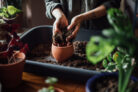
Over time, potting soil starts to “age” and lose its structure, meaning it’s no longer doing your maple any favors. Even if you’re a pro at fertilizing, you can’t really fix worn-out soil—it eventually just needs to be replaced. Plus, repotting is the perfect excuse to check if your tree is ready for a bigger “root house.” Here’s the lowdown on when and how to give your maple a fresh start.
When should you repot a maple?
If you see roots poking out of the drainage holes at the bottom of the container, that’s your maple’s way of screaming for help. It’s definitely time for fresh soil and a bigger pot, regardless of how long it’s been since the last move. Otherwise, a good rule of thumb is to repot every two to three years. By that point, the soil is usually tapped out and lacks the nutrients and aeration your tree needs.
The best time to do this is in early spring, right before the maple starts its spring growth spurt.
Getting your maple out of its old pot
When you’re getting ready to repot, hold off on watering for a day or two. Dry soil is much easier to slide out of a container than heavy, wet mud. Take a long-bladed knife and run it carefully around the inside edge of the pot to loosen things up. Then, follow these steps:
- Spread out an old blanket or tarp to catch the mess.
- Lay the pot on its side.
- Gently wiggle the pot and slide it off the root ball.
- Shake off or brush away as much of the old soil as possible.
- If the roots are really stubborn, you can give the root ball a gentle rinse with a hose.
Pro Tip:
If the pot is completely filled with roots (root-bound), pick out a new container that’s about 2 inches (4 cm) wider in diameter. If you’re reusing the old pot, make sure to give it a good scrub first.
Planting your maple in its new home
If you’re dealing with a larger maple, grab a friend! It makes the process much smoother and helps ensure you don’t accidentally snap any branches. You don’t need to prune the canopy back, since the root mass is staying largely intact.
- Start by creating a drainage layer at the bottom using coarse gravel or broken ceramic shards.
- Cover that drainage layer with a thin piece of permeable landscape fabric to keep the soil from washing out.
- Add a layer of fresh, high-quality potting mix (specifically for containers) until the maple can sit at the same depth it was previously.
- Center the tree in the pot and make sure the trunk is standing straight.
- Fill in the gaps with fresh soil, pressing down gently as you go to remove air pockets. Leave about an inch of space at the top to make watering easier.
- Move your maple back to its favorite spot and give it a deep, thorough watering.
Note:
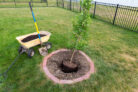
While a potted maple can be repotted easily, maples planted in the ground are a different story. You can usually only transplant a garden-grown maple within the first four years of its life; after that, it’s best to let it stay put.