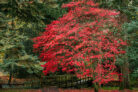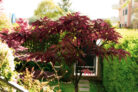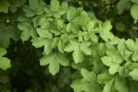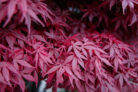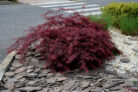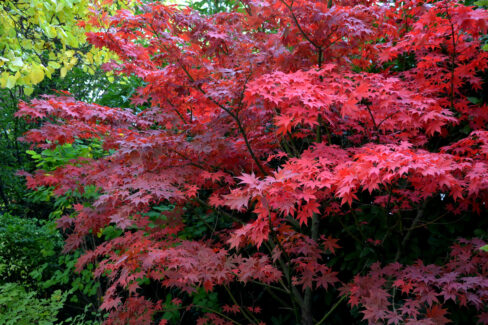
Moving a laceleaf Japanese maple (Schlitzahorn) takes a bit of know-how to get it right. If your tree has been in the ground for less than four years, you’re in luck—it hasn’t sent roots too deep yet, so the move should be pretty smooth. However, for older, established trees, transplanting can be a bit of a shock, so you’ll want to handle it with care.
How to Properly Transplant Your Japanese Maple
Let’s be honest: moving is stressful for a tree, but sometimes it’s necessary for its survival. You should consider giving your maple a new home if:
- Its current spot gets way too much scorching sun or is stuck in deep shade.
- The soil is super compacted and hard as a rock.
- The soil pH is way off (too acidic or too alkaline).
- You’ve got drainage issues and the roots are sitting in “wet feet.”
- Your tree is fighting off Verticillium wilt.
The best time to make the move is early spring, right before those first buds start to pop. Here’s your step-by-step game plan:
- First, pick out a spot where your maple will actually be happy.
- Dig a deep hole at the new site so it’s ready to accommodate a nice, large root ball.
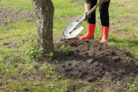
- Back at the tree, use your spade to cut a circle around the root ball. A good rule of thumb is to match the diameter of the tree’s canopy.
- Dig a trench about 4 inches wide around that circle to give yourself some working room.
- Follow that trench down and gently loosen the root ball from different angles.
- Once the soil feels loose, use a spade and a garden fork to carefully pry the root ball upward.
- Don’t go it alone! Depending on the size of the tree, you’ll definitely want two or three friends to help with the heavy lifting.
- To keep the soil intact around the roots during the move, wrap the root ball in a piece of burlap.
- When you place it in its new home, make sure it’s sitting at the exact same depth it was before.
- Mix your excavated soil with some rhododendron potting mix (they love that slightly acidic touch!) and fill in the hole.
- Give your tree a long, deep drink of water immediately. Keep the soil consistently moist for the next several days.
Pruning After the Move
Since your maple lost some of its root mass during the move, you’ll need to prune back the branches a bit too. This helps balance things out so the remaining roots aren’t struggling to support too much foliage while they recover.
Repotting Container Maples
If you’re growing your Japanese maple in a pot, it’s eventually going to outgrow its home. When you see roots poking out of the drainage holes or notice the soil being pushed upward, it’s time for a bigger pot. Just like with garden planting, the best time to repot is in early spring before the new growth starts.