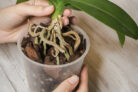
In their natural habitat, orchids are “epiphytes,” meaning they grow high up on rainforest trees. Those wild aerial roots aren’t just for show—they act like anchors to keep the plant secure and serve as straws to soak up water and nutrients from the humid air. Even though your indoor orchids don’t need to cling to a mahogany tree anymore, they still rely heavily on those roots to stay healthy!
Understanding Aerial Roots
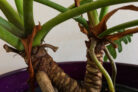
The aerial roots of epiphytic orchids are multitasking wonders. In the wild, they grip onto bark and rocks while absorbing moisture and nutrients from the environment. While your houseplant orchid doesn’t need to worry about falling off its shelf, those roots are still working overtime to keep the plant hydrated and fed.
Caring for Aerial Roots
If you want a thriving, blooming orchid, you’ve got to show the roots some love. Here are the essentials:
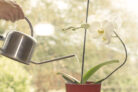
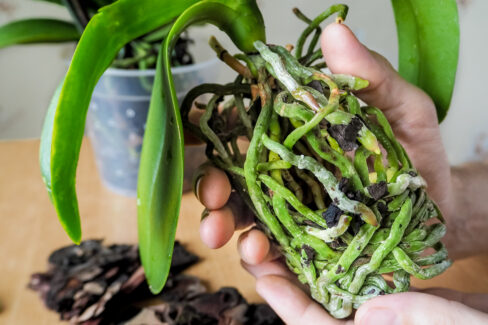
- Hydration: Mist the aerial roots regularly to mimic tropical humidity, and give the entire root ball a good soak (dunking) periodically.
- Nutrition: Don’t forget regular fertilizing to keep them strong.
- Light: These roots actually love light, so try to keep them in a bright spot.
What to Do with Those “Wild” Roots
Let’s be honest: when an orchid starts sending out a dozen roots over the edge of the pot, it can look a little messy. However, resist the urge to grab the scissors! You should never just cut off healthy aerial roots. They are vital lifelines for the plant’s growth and overall energy.
Too Many Roots? It’s Time to Repot
If your orchid is starting to look like an octopus—with roots spilling over the rim or even poking out through the drainage holes at the bottom—it’s telling you it’s ready for a new home. This is the perfect time for repotting.
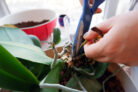
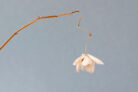
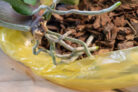
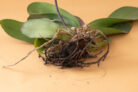
When you repot, take the opportunity to do a little “root surgery.” Use a sharp, sterilized knife or garden shears to trim away any old, dried-out, or mushy (rotted) roots. Pro tip: Dab a little cinnamon or charcoal powder on the cuts to prevent infection. When you move the plant to its new pot, gently tuck all those aerial roots down into the fresh orchid bark.
Mounting Your Orchid
If your orchid has an impressive set of aerial roots, you might want to skip the pot entirely and try mounting it on a branch or a decorative piece of wood. Because it has so many roots to grab on with, it will establish itself quickly. Just remember that mounted orchids dry out faster, so you’ll need to mist them regularly with lukewarm water to keep them happy.