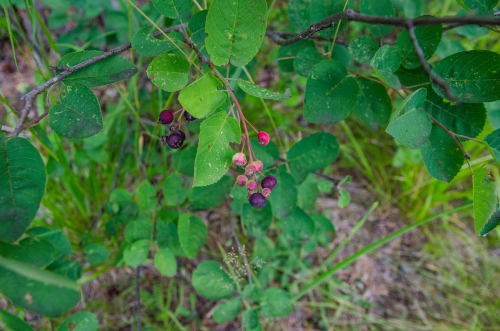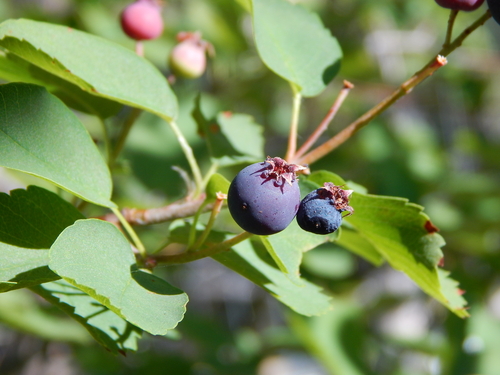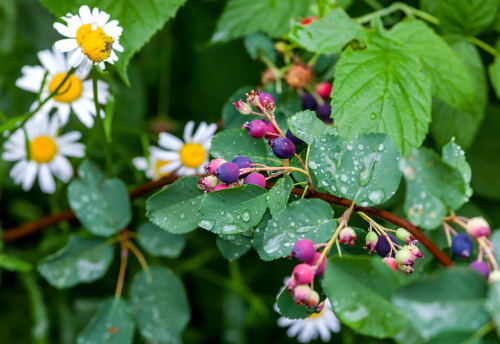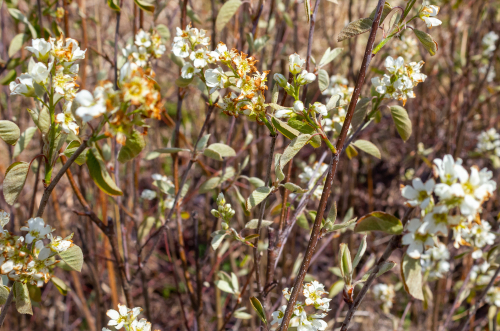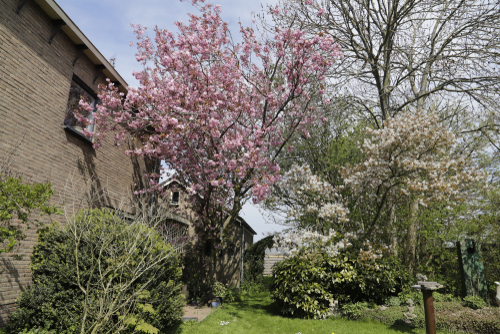
Most of us have heard the name “Serviceberry” (or maybe you know it as Juneberry or Shadbush), but not everyone knows what this plant is actually all about. Are the berries edible? Is it a tree or a shrub? Let’s clear up the mystery.
Is “Shrub” Even a Botanical Term?
First off, the distinction between a tree and a shrub isn’t really a strict botanical classification for plant species. When we talk about a “bush,” we’re usually just describing a plant that grows wide from the ground up—perfect for a privacy screen. “Shrub” really just describes a growth habit where several main stems grow parallel to each other.
A tree, on the other hand, typically has one main trunk and a defined canopy. The cool thing about the Serviceberry is that you can train it to be either a shrub or a tree. Depending on how much room you have in your yard, one might work better than the other. Generally, a shrub needs more horizontal space, while a tree takes up a smaller footprint on the ground.
Growing Serviceberry as a Shrub
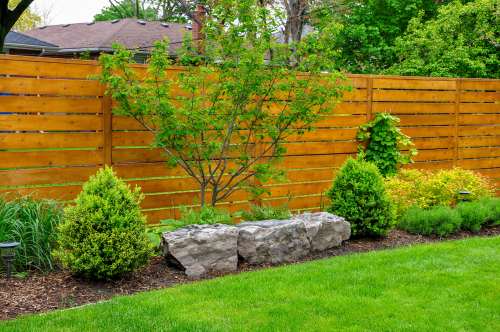
Naturally, the Serviceberry tends to lean toward a shrub-like growth habit. It likes to send up multiple main stems. However, after a few years, it can get so tall that it starts to lose that compact “bushy” look. If you want to keep yours looking like a tidy shrub, here are a few tips:
- Start a regular pruning routine early on.
- Choose a naturally smaller variety from the get-go.
- Plant your Serviceberry in a large container to limit its size.
Also, you’ll want to skip the fertilizer (except for a little boost when you first plant it). Extra nutrients just encourage it to shoot upward faster. If you plant several Serviceberries in a row, you can even create a beautiful hedge. If you’re growing these for the delicious fruit rather than just decoration, the hedge form is actually your best bet for a heavy harvest.
Growing Serviceberry as a Tree
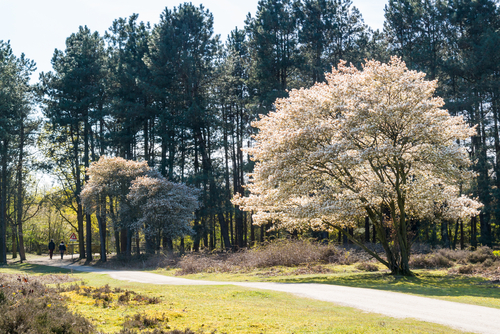
If a shrub isn’t your style, you can definitely train your Serviceberry into a tree. Sometimes it’s just an aesthetic choice—a single-trunk tree can look more elegant or fit a specific landscape design better. But often, it’s about space. A tree grows “up” rather than “out,” leaving you more room for underplanting.
A Serviceberry tree looks stunning once it reaches a certain height after a few years. You can achieve this look through strategic pruning or by “limbing up” (removing the lower branches). Even if your plant has multiple stems, you can still prune it to have a tree-like canopy. Just a word of caution: be gentle and take your time with the shears. Serviceberries grow at a pace where a pruning mistake can take a long time to grow out!