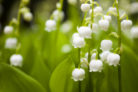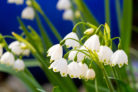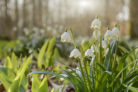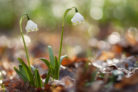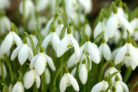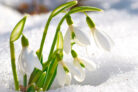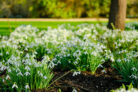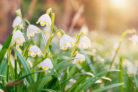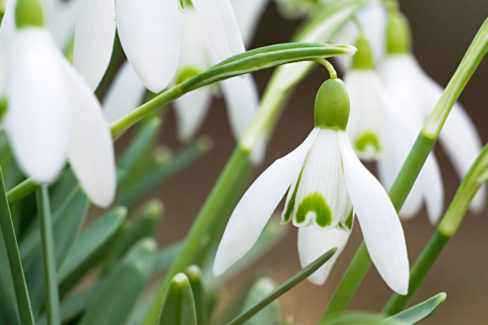
Spring snowflakes (*Leucojum vernum*) are often mistaken for common snowdrops (*Galanthus nivalis*), which is why you’ll sometimes hear people call them “Giant Snowdrops.” Think of them like sisters: they definitely share some family resemblance, but they aren’t twins! There are a few key ways to tell them apart. Here’s my guide on how to spot the difference between a spring snowflake and a snowdrop.
What Spring Snowflakes and Snowdrops Have in Common
Both of these beauties are among the very first signs of spring, popping up with those romantic white bell-shaped flowers while the ground is still waking up. They both belong to the Amaryllis family and love a fresh, moist spot in the garden. You’ll usually see them blooming in March, though snowdrops are often the early birds, showing up a little sooner than the snowflakes. One important thing to remember: both are protected species in the wild. Never dig up or damage these plants if you find them in nature—stick to buying bulbs from your local nursery!
Spotting the Differences in the Details
- Snowdrops are shade lovers.
- Spring snowflakes prefer a bit more sunshine.
- Spring snowflakes are generally taller with broader leaves and feature cute green (or sometimes yellow) dots at the tips of their petals.
- Unlike snowdrops, all the petals on a spring snowflake are the same length.
- Snowdrops have a unique structure: 3 short inner petals and 3 longer outer petals.
- On a snowdrop, you’ll only see a green mark on those tiny inner petals.
- Spring snowflakes have 6 petals of equal length, forming a more uniform “cup” shape.
- While snowdrops usually produce just one flower per stem, spring snowflakes can sometimes have two.
Both of these plants are a bit “anti-hoe.” They really don’t like it when you go digging around their roots with garden tools during the summer. If you want them to spread and naturalize beautifully, take a hands-off approach. Stick to gentle hand-weeding so you don’t disturb their slumber.
A Quick Safety Note for Families
If you have little ones running around the garden, keep a close eye on them. Both plants are quite toxic, especially the bulbs. If any part of the plant is swallowed, contact a doctor or poison control immediately. Even just handling them can cause skin irritation for some people, so I always recommend wearing gloves when you’re planting or propagating them.