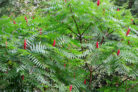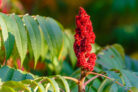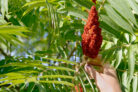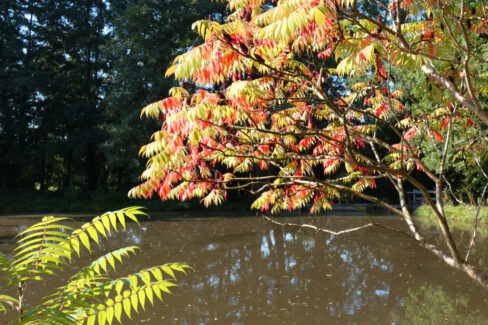
Depending on the variety and where you plant it, a Staghorn Sumac (*Rhus typhina*) can easily reach several feet in height. But here’s a cool tip for my fellow plant lovers: you can actually grow this beauty as a miniature bonsai! The best part? It keeps that absolutely stunning fall foliage even in its tiny form.
Bonsai Culture: Wiring and Pruning
To keep your Staghorn Sumac looking like a classic bonsai, you’ll need to stay on top of maintenance. Make sure to prune back:
- Branches, twigs, and new shoots
- Starting in May
- Every six to eight weeks
Don’t forget the roots! You should trim the root ball whenever you repot the tree to make sure the “underground” part stays in perfect balance with the leafy canopy above.
To get those artistic shapes, you can use aluminum wire. Just wrap it in a spiral around the branches and twigs to guide them into the right position.
Location
The Staghorn Sumac is an outdoor bonsai through and through, so it belongs outside year-round. Just like its full-sized cousins, it needs fresh air, sun, and rain to really thrive. Plus, if you give it a spot in full sun, those autumn colors will be way more intense and vibrant.
Overwintering
Since these trees are naturally hardy, your bonsai can stay outside during the winter. To keep it safe, I recommend nestling the pot into some peat and adding about a two-inch layer of mulch or substrate over the top for extra insulation.
Alternatively, you can move it into an unheated greenhouse for the winter, as long as the temperature stays between 32°F and 50°F (0-10°C).
Care
Watering
When growing *Rhus typhina* as a bonsai, the golden rule is: never let the soil dry out completely. You want to keep it consistently moist all year long. Here’s the best way to water:
- Give the tree a quick shower from above.
- Repeat the process a few times until the soil is fully saturated.
- Use a very fine spray nozzle so you don’t wash the soil away.
- Rainwater is best, but settled tap water works too!
Fertilizing
Generally, you’ll want to feed your bonsai regularly during the growing season (spring through fall), but take a break while it’s flowering. Also, hold off on the fertilizer for a few weeks after repotting to let the roots settle. You can use:
- Organic fertilizer pellets
- Granular fertilizer
- Liquid bonsai fertilizer
Repotting
Ideally, you should repot your Sumac bonsai every two years, with spring being the perfect time to do it. Even if you aren’t moving it to a bigger pot, you should swap out about two-thirds of the old soil for fresh substrate.
If the tree has outgrown its home, it’s time for a new pot. A good rule of thumb is that the length of the bonsai pot should be about two-thirds the height of the tree!