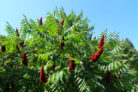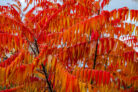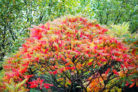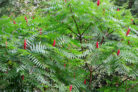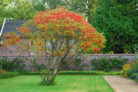
The Staghorn Sumac (botanical name *Rhus typhina*) usually grows as a large shrub or small tree in our neck of the woods. As a deciduous plant, it drops its leaves in the fall, but not before putting on a spectacular color show that’ll make your jaw drop! On the flip side, the flowers themselves aren’t quite as flashy as the foliage.
Appearance and Growth
When it comes to the Staghorn Sumac, you’ve got to distinguish between the boys and the girls. Since this plant is mostly dioecious (meaning individual plants are either male or female), your shrub will produce either male or female flower panicles.
These flowers grow at the tips of this year’s new wood. Because of this, the shrub continues its growth through side buds. Botanists call this “sympodial branching,” but you can just think of it as the plant’s way of branching out sideways.
Male Flowers
Here is what you can expect from the male blooms:
- A loose, airy flower cluster
- About 8 to 10 inches long
- Individual flowers are a yellowish-green hue
Female Flowers
The female blooms have a slightly different vibe:
- A compact, upright flower cluster
- About a third smaller than the male versions
- Individual flowers are more of a solid greenish color
Blooming Season
The Staghorn Sumac typically hits its stride in June and July. Usually, the ladies show up first—female flowers tend to appear about a week before the males. Since the sumac blooms after the leaves have already filled out, those greenish panicles can actually be a bit hard to spot against the foliage.
The Fruit
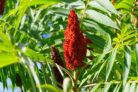
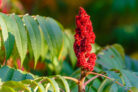
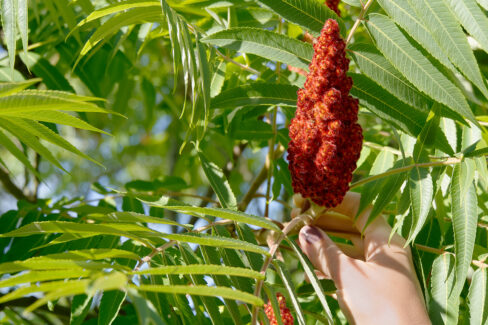
While the flowers are pretty low-key, the fruit clusters are the real stars of the show (alongside that fall foliage, of course!). These upright, cone-shaped clusters are made of tiny, round drupes. Because they look like bright red candles, people often mistake the fruit for the actual flowers.
The fruit is fully grown by August and ripens in the fall. The best part? They often stick around all the way until next spring, giving your garden some great winter interest. Interestingly, the plant doesn’t even need the flowers to be fertilized to develop these fruit clusters.
Just a quick heads-up: I wouldn’t recommend snacking on them. Eating large amounts can lead to some pretty unpleasant stomach and digestive issues!