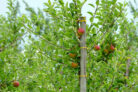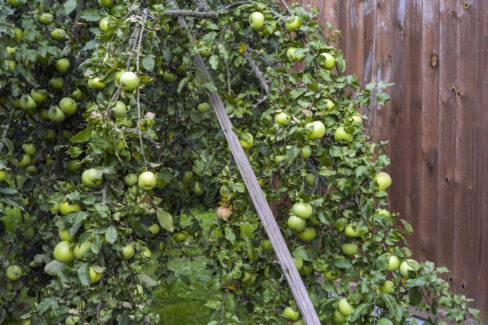
Some years, your fruit trees will practically overflow with a bumper crop, while other years are a bit quieter. If you missed the window for thinning out the fruit early in the season, your apple tree might be struggling under some serious weight right now. When those branches start sagging, it’s time to step in and help. You don’t want the next summer storm to snap a limb or, worse, uproot the whole tree!
How to Support Heavy Branches
When the fruit gets too heavy, your trees and shrubs are at a real risk of breaking. To save your harvest (and your tree), you’ll need to prop them up. For branches closer to the ground, a sturdy pole or post with a “Y” fork at the top works wonders. Just place the support at the branch’s center of gravity to balance the weight. If the heavy branch is too high for a ground post, your best bet is to use some strong rope or coconut fiber twine to tether it to the main trunk for extra stability.
Prepping Your Tree Supports
You can easily find pre-made Y-shaped branch crutches at most hardware stores or garden centers. To make sure the branch sits comfortably without getting “bark burn” or scratches, I always recommend lining the fork with a scrap of soft leather or burlap. Make sure the support is the right height—if it’s too long, just trim it down with a hand saw. That extra padding is key because it prevents the bark from rubbing raw when the wind starts blowing.
Using a Simple Wooden Board
If you’re a DIYer, you can make your own support using a standard wooden board. Just saw a V-shaped notch into one end. Make sure the notch is wide enough for the branch to nestle in securely, and use a bit of sandpaper to smooth down any rough edges. Again, don’t forget to add a little leather padding to keep the tree’s “skin” healthy and injury-free.
Supporting a Tree at Planting Time
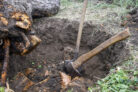
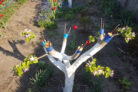
Even if a young tree looks sturdy after its initial pruning, don’t let it fool you! Newly planted trees are surprisingly vulnerable to the wind because their roots haven’t anchored deep into the soil yet. To keep your tree from leaning or toppling over in its first few years, you really need to stake it. To avoid damaging the root ball, drive your stake into the planting hole at a slight angle *before* you put the tree in. Aim the stake against the prevailing wind direction (usually facing West) to give it the best possible defense.