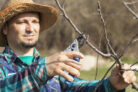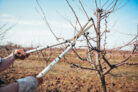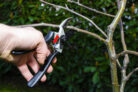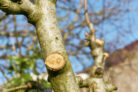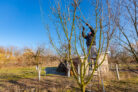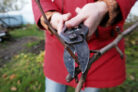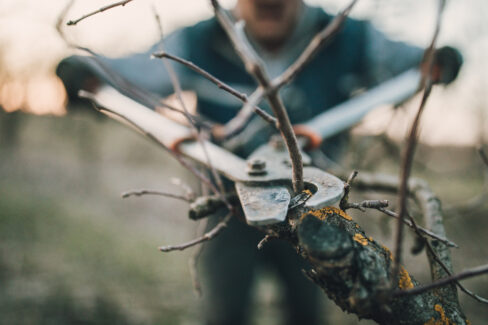
If you’ve just moved into a new place or taken over a garden plot, chances are you’ve inherited some old apple trees. Don’t be too quick to grab the chainsaw, though! These heirloom varieties are often much easier on people with allergies and have a flavor you just can’t find at the grocery store. Instead of starting over, you should give those old-timers a “facelift” with some rejuvenation pruning.
Keeping the Tree Canopy in Balance
Properly shaping the canopy is non-negotiable. You’re aiming for a structure that is vigorous, sturdy, well-organized, and airy.
- A vigorous canopy constantly puts out new shoots and fruiting wood—the secret sauce for consistent, high yields year after year.
- Sturdiness ensures the branches can actually hold the weight of a heavy harvest without snapping.
- A well-organized tree makes your life much easier when it comes to seasonal maintenance.
- An airy canopy allows sunlight to reach every branch. Plus, good airflow is your best defense against pests and diseases that love to hide in damp, crowded spots.
When is it Time for a Major Prune?
If a tree has been neglected for years, it starts to show its age. You’ll notice the new growth stalls out and your harvest becomes disappointing—the apples stay small, and the tree might only produce fruit every couple of years. If your tree looks like it’s struggling, it’s time for a heavy rejuvenation prune.
How to Rejuvenate Younger vs. Older Canopies
Rejuvenation involves cutting back the canopy—sometimes quite significantly—into the older wood. The best time to do this is during the dormant season (late winter or very early spring).
Pruning Younger Canopies
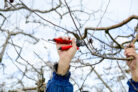
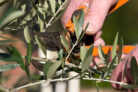
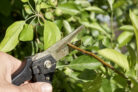
If the main structural branches are still covered in side shoots all the way down, you mostly just need to thin things out. A good rule of thumb is to remove about a third of the growth. Make sure to cut away any diseased, broken, or damaged branches, cutting back until you hit healthy wood.
Pruning Older Canopies
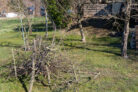
For older, overgrown trees, you might need to remove up to half of the canopy, but don’t do it all at once! It’s best to spread this process over a few years so you don’t shock the tree.
- Year One: Start with a heavy thinning in the fall to get some light back into the center.
- Year Two: Once you see new shoots popping up on those bare spots, you can cut back the main branches by half or more.
Be sure to protect any healthy fruiting wood you find. Treat the new shoots that emerge just like you would on a brand-new tree. After about 3 to 4 years, you’ll have a completely rebuilt, productive canopy!