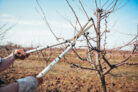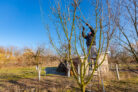
Ask ten different pros how to prune a tree, and you’ll probably get ten different answers! There are tons of guides out there, and I always recommend checking out a local workshop if you can. But if you’re itching to get out into the garden and start clipping right now, I’ve got you covered with the essential tips and tricks to get it right.
Pruning a Young Apple Tree
Getting the pruning right on a young apple tree is a total game-changer, especially the initial planting cut and the training cuts that follow. The golden rule? Keep that main central leader (the trunk’s extension) strong and pick three to four main “scaffold” branches to grow off it. These will eventually hold your side branches. It’s worth taking your time here—if you nail the training phase in the first few years, your tree will be set up for a long, healthy life. Once the structure is solid (usually after 5 to 10 years), you’ll mostly just be doing light thinning.
Timing Your Planting Cut
The very first trim a tree gets after it hits the ground is called the planting cut. If you planted in the fall, wait until early spring to do this. If you’re planting in the spring, go ahead and prune it immediately. On a young apple tree, the higher branches usually grow faster than the lower ones. The trick is to prune them back to a uniform level so the whole tree grows with equal strength.
Step-by-Step: The Planting Cut
- Pick the strongest vertical shoot to be your central leader.
- Choose 2 to 4 main side branches (scaffold branches). Ideally, these should grow out at about a 45-50° angle. If they’re too steep, you can use a wooden spreader to push them out; if they’re too flat, you can tie them up to a more upright position.
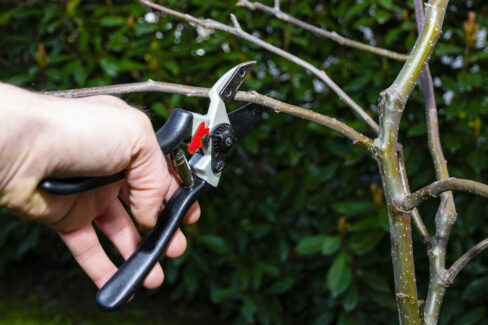
- Cut these main branches back by about two-thirds. Use the weakest branch as your guide and cut the others to match its height.
- Remove any other competing shoots entirely.
Choosing Your Tree Shape
The shape you choose for your apple tree really depends on how much space you have in your yard. The “bush” or “open center” form is the most popular because it’s easy to manage and gives you a great harvest. If you’re working with a tiny backyard, you might want to look into espalier or cordon training—they look beautiful against a wall or fence and save a ton of space.
Caring for Your Tree After the First Cut
For the next few years, you’ll continue pruning in a similar way until the “skeleton” of the crown is fully established. As the tree gets older, you can actually start pruning a bit less each year. Starting in the second year, you’ll also need to trim the side shoots growing off your main scaffold branches. Pro tip: In mid-summer, keep an eye out for “competitor” shoots that are trying to outgrow your leader and snip off any branches growing inward toward the center of the tree.