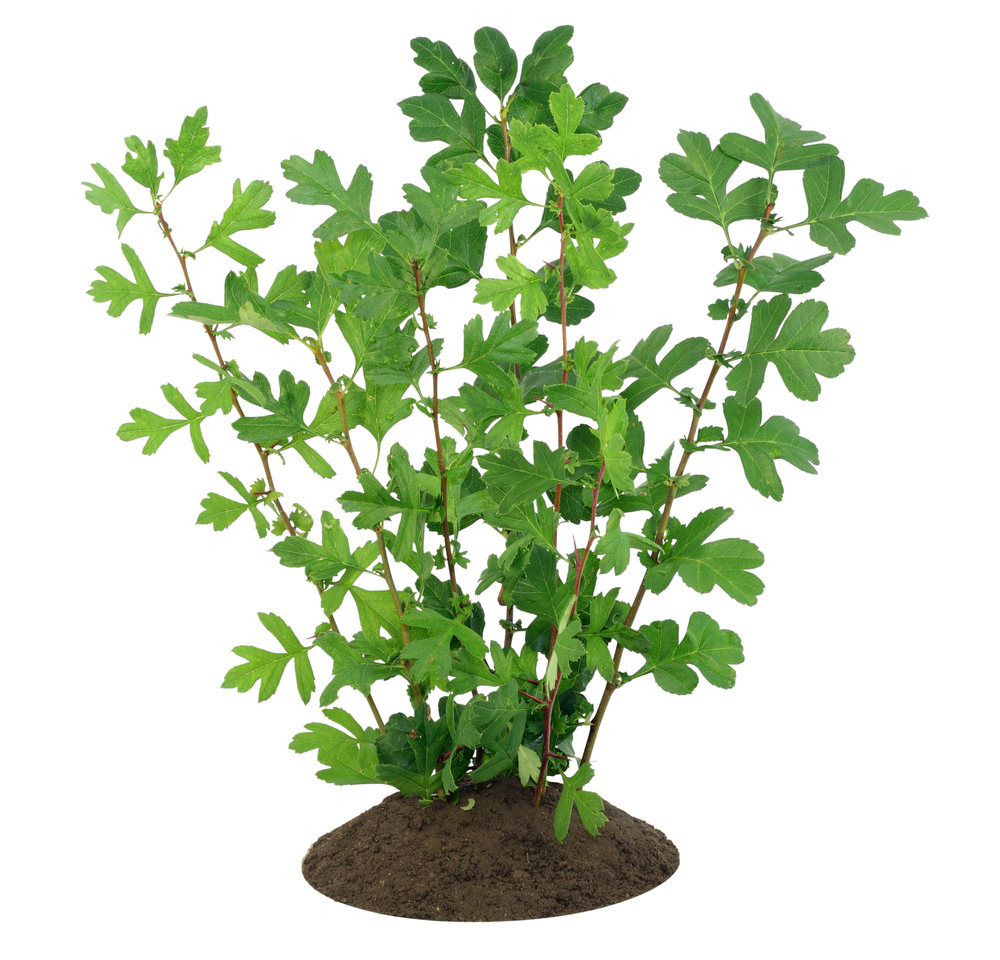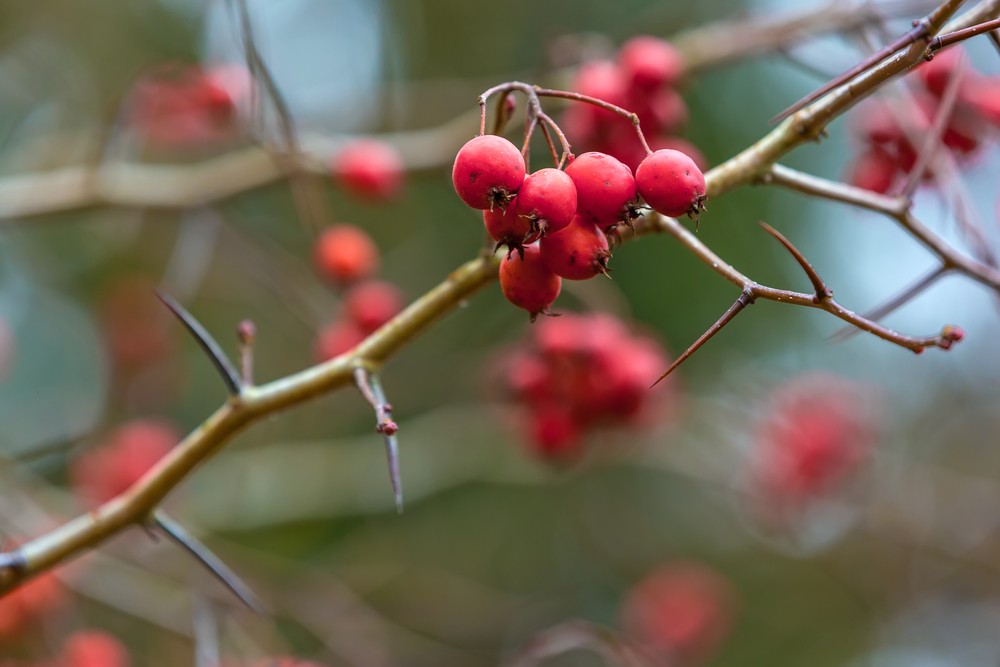
As the name suggests, Hawthorn comes with its own built-in security system: a protective coat of thorns. Whether you’re growing it as a tidy hedge or letting it reach its full potential as a 30-foot tree, all our native varieties and hybrids of this rose-family relative are packing some serious spikes.
Why Hawthorn Has Thorns (and What They’re For)
The name “Hawthorn” actually tells you a lot about the plant—”Haw” comes from an old word for hedge, and “thorn,” well, that speaks for itself! In some old-school circles, it’s even called “Cockspur thorn” because the curved spikes look a lot like a rooster’s talons.
Biologically speaking, these thorns are actually modified leaves or stems. The plant reduces the leaf surface and reinforces the structure with tough fibers (called sclerenchyma) to create a sharp point. Some thorns even form from the tiny “stipules” at the base of the leaves. If you want to dive deeper into the foliage, check out our article on Hawthorn leaves.
So, why all the armor? Primarily, it’s about self-defense. Those prickly branches keep hungry animals from munching on the plant’s interior. Plus, the thorns actually help the plant anchor itself as it grows.
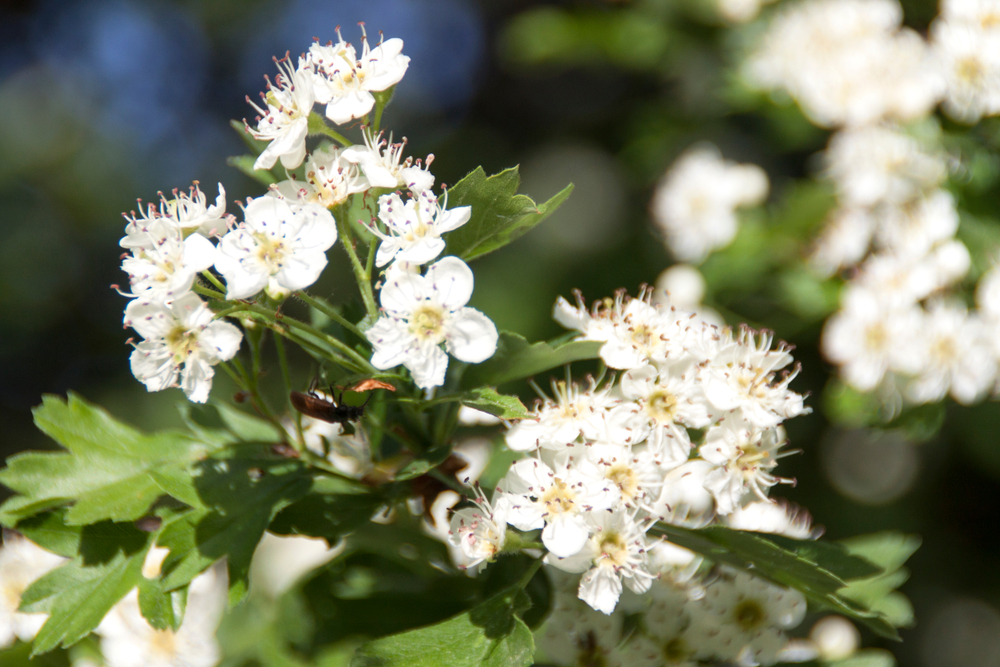
Because the thorny branches often reach all the way to the ground, Hawthorn makes an incredible “bird hotel” for nesting. It’s also a buzzing hub for wildlife, supporting everything from wild bees and butterflies to wasps. This is why I always recommend Hawthorn as a much more eco-friendly alternative to something like Cherry Laurel. It’s a fantastic, natural way to mark property lines or fence in a field.
The Thorny Details of Native Species
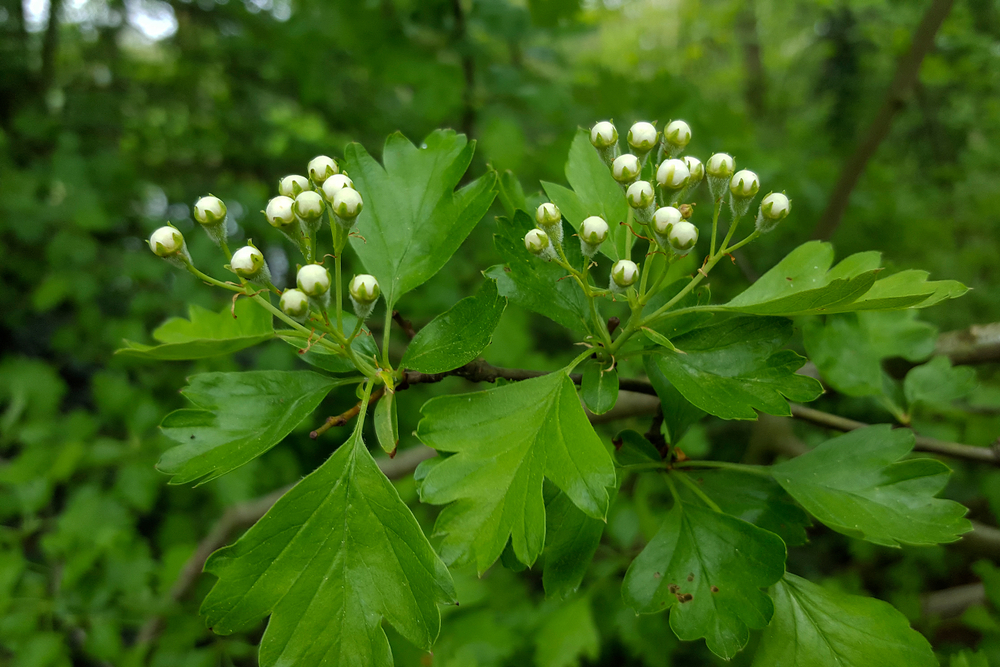
Our native Hawthorns—like the Common, Midland, and Large-Sepal varieties—feature what we call “shoot thorns,” which are similar to what you’d find on a Blackthorn bush. You can learn more about the specific Hawthorn species here.
Interestingly, Hawthorn can sometimes “mellow out” as it gets older. Since the thorns are mainly there to stop animals from grazing, the plant might stop producing as many spikes once it grows tall enough to be out of reach. It’s almost like the tree realizes it doesn’t need as much security once it’s reached a certain height!