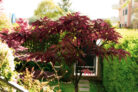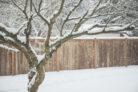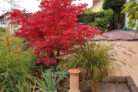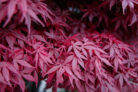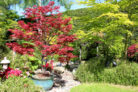
Just like any other tree in your yard, a Laceleaf Japanese Maple can benefit from a little trim now and then. However, if you want it to keep that gorgeous, compact shape and burst with life in the spring, you’ve got to be a bit careful with those shears.
How to Prune Your Laceleaf Maple the Right Way
The best time for a light cleanup is early spring, right before the first buds start to pop. Here are a few pro-tips to keep in mind:
- Aim for late winter to get the job done.
- Make sure you prune before the leaf buds start to swell.
- Pick a dry day when there’s no frost in the forecast.
- Avoid pruning in direct, scorching sunlight.
- Stick to cutting “new wood” (growth from last year). These maples aren’t big fans of sprouting from old, thick wood.
- Make your cuts just above a leaf node or a “dormant eye.”
- Don’t go overboard—only take off about a third of last year’s growth at most.
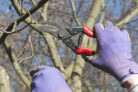
- This is a big one: always use sharp, sanitized tools. Dirty shears are the fastest way to spread fungal diseases.
You’ll mostly want to prune varieties that grow quickly, like the ‘Atropurpureum’ Red Laceleaf, which can shoot up nearly 20 inches in a single year. Slow growers like ‘Mikawa yatsubusa’ or ‘Shaina’ usually don’t need any help; they naturally stay compact without sending out those awkward, long branches. Of course, if your maple has suffered some frost damage, you should prune those branches back to the healthy wood (you’ll know it’s healthy if you see green tissue under the bark).
General Tips for Ornamental Maples
Most ornamental maples, including the Laceleaf varieties, don’t strictly *need* to be pruned because they don’t really “get old” or leggy in the way other shrubs do. They’re slow growers that usually keep a tidy shape on their own. During the first few years, you might want to do a little “structural training.” If you see long, unbranched shoots, cut them back by half. If a branch is damaged, remove it entirely right at the trunk so you don’t leave an ugly stub.
One thing to watch out for: some maples tend to “bleed” sap from their cuts. It takes a little while for the tree to seal these wounds, and during that time, fungal spores can try to move in. That’s why clean, sharp tools are non-negotiable! Keep an eye on the cuts to make sure they’re healing up nicely.
At the end of the day, the best-looking Laceleaf Maple is usually one that’s allowed to do its own thing, with only the occasional light touch-up from you!