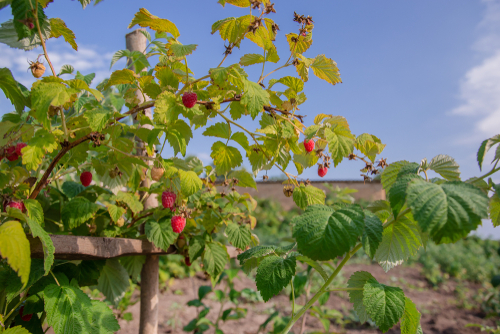
Raspberries are famous for growing those long, lanky canes that eventually get so heavy they start leaning toward the ground—especially when the wind picks up or a storm rolls through. To keep them from snapping under their own weight, you’ll want to tie them up and give them some extra support.
Plant your raspberries with a trellis from the start
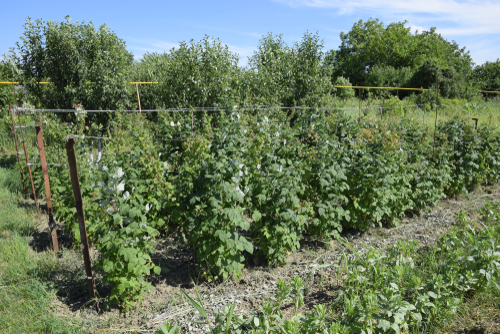
Most raspberry varieties need a support system anyway, so your best bet is to install a trellis right when you plant them. As the canes stretch out, all you have to do is tie them to the frame. Don’t be afraid to gently weave the canes through the trellis if they aren’t doing it on their own.
Trellising isn’t just about preventing broken branches; it also ensures that plenty of sunlight and airflow reach every part of the plant. This is a great way to naturally prevent pests and diseases. For supporting your raspberries, you can use:
- V-shaped trellises
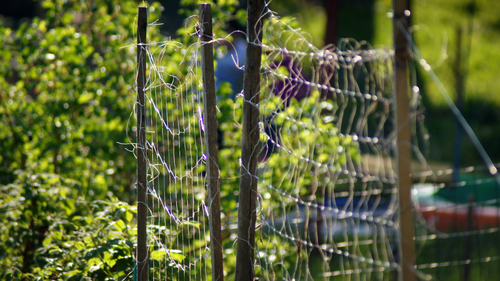
- Wire frames
- Bamboo stakes
How to tie up the canes correctly
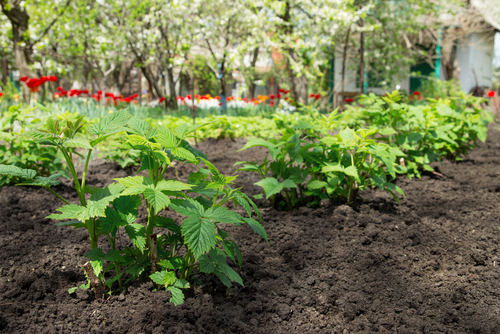
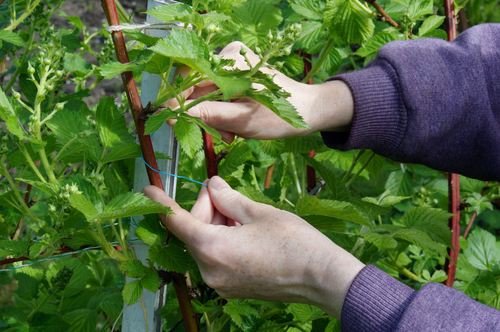
You don’t need to worry about tying them up until they’ve reached a decent height. Anything under 20 inches (about half a meter) is usually sturdy enough on its own. Once they get taller, start by securing the canes to the lower part of your support system and continue tying them higher up as they grow.
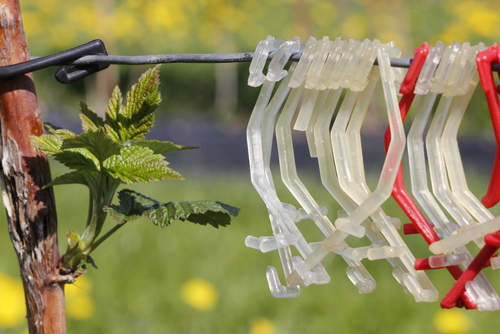
For ties, standard garden twine or thin wire works just fine. You can also find specialized garden clips, which are great because they won’t pinch or “strangle” the canes. If you’re using string or wire, just make sure to keep the loops loose. The clips are a personal favorite of mine because they’re easy to remove without damaging the plant.
Supporting Summer vs. Fall Raspberries
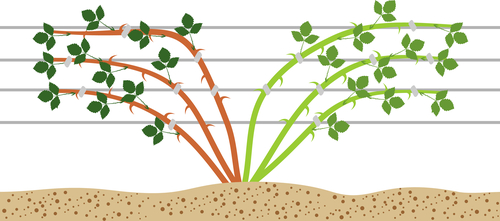
For summer-fruiting raspberries, a V-shaped trellis is the way to go. It mimics the plant’s natural growth habit perfectly. You can train the first-year canes to one side and the second-year (fruiting) canes to the other. This makes life so much easier because all your berries will be on one side, making it a breeze to harvest them.
Keep in mind that summer raspberries only fruit on two-year-old wood. Once those canes are done producing for the season, you can simply prune them away and look forward to the crop on next year’s canes.
Fall-fruiting raspberries (everbearing) usually do best with a simple wire frame or trellis. They don’t typically grow as tall as the summer varieties, so a basic setup using bamboo stakes or something similar is usually more than enough to keep them standing tall.