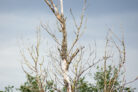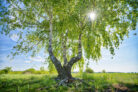
Birch trees and mushrooms go together like peanut butter and jelly. In the wild, they often form a “symbiotic” relationship where both parties help each other out. However, if you have a birch tree in your backyard, you need to keep a close eye on things. While some fungal friendships are great, others can spell disaster for your tree. Here’s how to tell the difference and protect your landscape.
Watch Out for These Parasites
While mycorrhizal fungi are the “good guys” that help birch roots absorb nutrients, there’s a darker side to the fungal world: parasites. These fungi prey on weakened or aging birch trees, attacking them from the inside out and causing brown or white rot. They eat away at the cellulose, making the trunk and branches brittle and dangerous. Here are the four most common culprits you’ll see on birch trees:
- Birch Polypore: A whitish, kidney-shaped fungus that causes severe brown rot.
- Tinder Fungus: Light gray with a concave (curved inward) underside.
- Artist’s Conk: Flat with a distinct white outer edge and a brown interior.
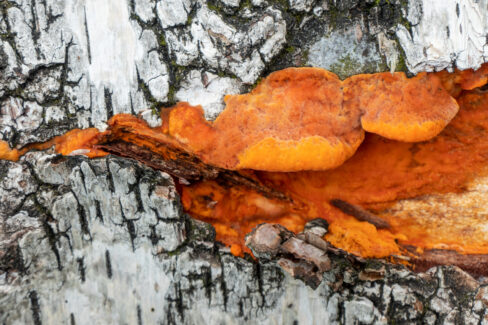
- Cinnabar Polypore: Bright cinnabar red (it even stains the wood inside!); relatively small at about 4 inches.
Pro Tip:
The Birch Polypore is actually famous in herbal medicine! It’s been used in teas to help with digestive parasites, and some studies suggest it contains compounds that may support the immune system during serious illnesses.
What to Do if You See a Mushroom
The mushroom you see on the bark is just the “fruiting body”—the part responsible for spreading spores. Think of it like the apple on a tree; the actual “body” of the fungus is hidden deep inside the wood. If you spot one, remove and dispose of it immediately to prevent spores from jumping to your other trees. Unfortunately, once the fungus is inside the tree, it’s nearly impossible to “cure.”
A birch can survive for a few years with a parasitic infection, but eventually, it will succumb. The real danger is “windthrow”—where the weakened wood snaps during a storm, potentially hitting your house or a power line. It’s vital to cut down an infested birch before it becomes a hazard. Always consult a professional arborist and check with your local municipality to see if you need a permit before removing a large tree.
Preventing Fungal Issues
The best defense is a good offense! Make sure your birch is planted in an ideal location so it stays strong enough to fight off diseases. Since fungal spores enter through open wounds, try to prune your birch as little as possible. If you do have to make large cuts, consider using a pruning sealer to close the “door” on spores. In some cases, a preventative fungicide might help, but definitely chat with a garden expert before going that route.