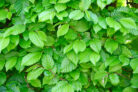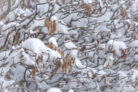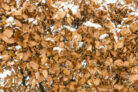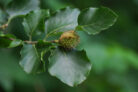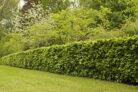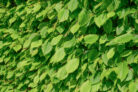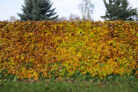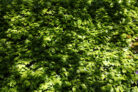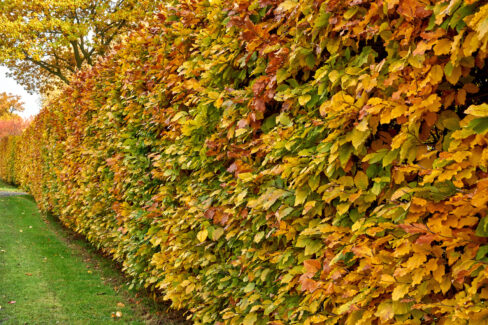
Hornbeams and European Beeches are both classic native deciduous trees that look incredibly similar at first glance. However, they actually have some pretty distinct differences! For starters, they aren’t even in the same botanical family: the European Beech is a true member of the Beech family, while the Hornbeam is actually a member of the Birch family.
Which hedge should you plant?
Deciding between a European Beech and a Hornbeam really comes down to your personal style and your yard’s layout. While they look alike, their “personalities” regarding sunlight differ. European Beeches love the sun and can handle partial shade at most. Hornbeams, on the other hand, are much more laid back and will happily grow in full shade.
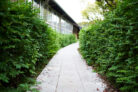
One big thing to consider is what’s happening underground. Hornbeams have deep taproots, which makes them pretty drought-tolerant once established. Because their roots go straight down, they are safe to plant near walls, driveways, or paths without worrying about damage. European Beeches are the opposite—they have horizontal, spreading roots. These can easily lift up sidewalk pavers or mess with underground pipes and foundations. If you go with a Beech, you definitely need to keep a safe planting distance from your house and walkways.
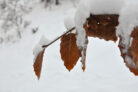
In terms of maintenance and privacy, they’re pretty neck-and-neck. Both need a good trim twice a year to stay tidy. Both offer great privacy, though the European Beech has a slight edge in winter. It tends to hold onto its dried brown leaves until the new buds push them off in the spring, giving you a bit more of a year-round screen.
Key differences between Beech and Hornbeam:
Before you head to the nursery, here’s a quick cheat sheet on how these two stack up:
- Hornbeams leaf out earlier in the spring than Beeches.
- Hornbeams are faster growers.
- Hornbeams are usually more budget-friendly than European Beeches.
- Hornbeams aren’t picky about soil; they’ll grow almost anywhere.
- Hornbeam leaves turn yellow in the fall and usually drop right after the first frost.
- European Beech leaves turn from yellow to a beautiful, warm russet red in autumn.
- Freshly trimmed Beech leaves can be a bit sensitive to sunburn.
- Hornbeam leaves stay a consistent green throughout the summer.
- European Beeches start with reddish new growth that turns green (unless you get the “Copper Beech” variety, which stays purple-red).
- Beech leaves are smooth with straight edges.
- Hornbeam leaves feel a bit rougher and have distinct, “toothed” edges and deep veins.
- You generally wait to prune a Hornbeam until it reaches your desired height.
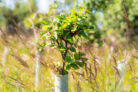
- European Beeches need regular thinning and pruning early on to encourage thick, bushy branching.
- European Beeches prefer sandy soil that stays consistently moist—not too soggy, but not bone dry.