Once you’ve got your European Beeches (Rotbuchen) settled in and established, they’re pretty much the “set it and forget it” stars of the garden. They require very little maintenance, which gives you plenty of time to sit back and appreciate their unique personality. One of the coolest things to geek out on? Their buds.
Everything You Need to Know About Beech Buds
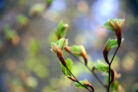
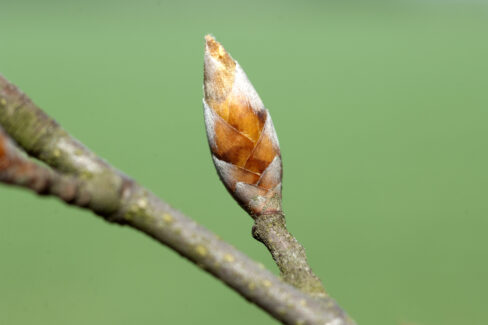
The buds are a total giveaway for this tree—they’re one of its most distinctive features. In fact, you can identify a European Beech by its buds long before the first leaf even unfurls. Here’s what to look for:
- They are super slim, pointy, and lance-shaped.
- They can grow up to nearly an inch (2 cm) long.
- They grow in an alternating pattern along the twig.
- They stick out at a sharp angle from the branch.
- They have a beautiful reddish-brown color.
- Each bud holds the potential for either leaves or flowers.
If you take a closer look, you’ll see the bud is protected by a series of scales that look almost like a suit of armor. These buds are tough—they sit firmly on the branch and don’t come off easily. The tree actually prepares them a full year in advance, and you can spot them easily by the slight thickening on the twig.
Pro tip: If you’re pruning young beeches to encourage bushier growth, make sure to leave at least three buds on the branch. These are the “launch pads” for new side shoots. If you snip them all off, you’ll miss out on that lush, branched look.
Spring Awakening
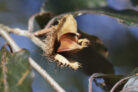
When spring rolls around, the magic happens. That “armor” of scales finally cracks open to reveal the new leaves or flowers inside. By late April, the foliage is usually fully out, and the blooming period begins. Just a heads-up: don’t expect flowers on a baby tree. European Beeches usually need to be about 20 years old before they start producing blossoms. When they do, you’ll find both male and female flowers on the same tree.
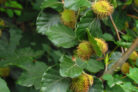
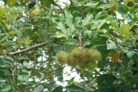
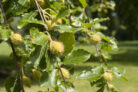
The male flowers look like delicate little yellowish tufts, while the female flowers are green, cup-like structures that eventually turn into beech nuts (beechmast). However, you’ll need to be patient for the harvest—those little, slightly toxic nuts usually don’t appear until the tree is at least 40 years old!
If you’re growing a beech hedge, you probably won’t see many flowers. Because of regular pruning, the flowering wood usually gets trimmed away before it has a chance to show off.
One last trick: You can tell a European Beech apart from a Hornbeam just by looking at the buds. The European Beech has those reddish, armored scales, while Hornbeam buds are rounder and have a greenish-red tint.