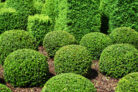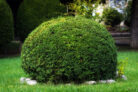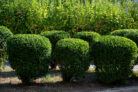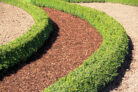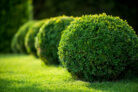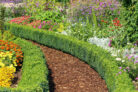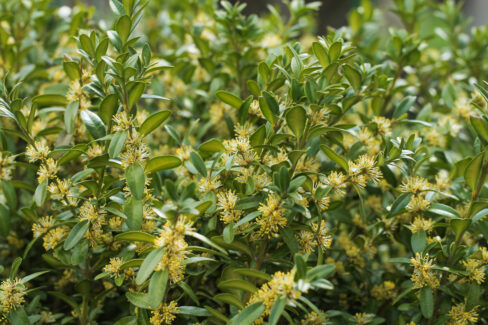
In the home garden, the boxwood (scientifically known as *Buxus sempervirens*) is a real multitasker. Thanks to its super dense growth habit, it’s the go-to choice for clipping into fancy topiary shapes or creating a “living wall” to border your flower beds. However, most people don’t think of boxwoods as flowering plants. But here’s the secret: they actually can bloom! You just have to give them the chance.
The Lowdown on Boxwood Blooms
Let’s look at the facts regarding boxwood blossoms. Whether or not your shrub will ever actually show them off is a different story (which we’ll dive into in the next section), but here is what you need to know:
- Boxwoods won’t bloom until they are at least ten years old.
- The flowering window is usually between March and May.
- The exact timing depends heavily on the weather.
- They tend to alternate between “heavy” bloom years and “light” ones.
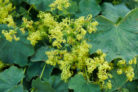
- The flowers appear as small clusters in the leaf axils.
- These clusters are pretty subtle and yellowish in color.
- They give off a surprisingly pleasant fragrance.
- After the flowers fade, seeds ripen inside small capsules.
- You can actually propagate boxwoods from these seeds, though it’s a slow and tedious process.
Quick Tip:
The scent of these flowers is a magnet for bees, butterflies, and bumblebees. They’ll flock to a blooming boxwood to feast on the nectar. To do these pollinators a favor, try to wait until the blooming period is over before you do any heavy pruning.
How to Encourage (or Prevent) Flowering
Many gardeners worry that producing flowers takes too much energy and will cause their boxwood to stop growing. In reality, growth only slows down temporarily. Once the blooming is done, the plant usually bounces back quickly and makes up for lost time. However, if you’d rather skip the flowers, the solution is simple: prune, prune, prune. Since pruning is a standard part of boxwood maintenance anyway, most plants never get the chance to flower.
And that’s the secret to getting them to bloom, too! Just put the shears away for a while. If you want to give them an extra boost, a little shot of phosphorus-rich fertilizer in the spring can help encourage those buds.
Yellow Leaves During Bloom Time
When a boxwood is flowering, it gets a lot hungrier for nutrients and thirstier for water. If the roots can’t find enough of either, those vibrant green leaves can turn yellow in a heartbeat. Keep a close eye on your plant during this time and step up your watering and feeding if needed. Just remember to rule out other culprits first—yellowing can also be a sign of diseases or pests like the notorious boxwood leafminer or box tree moth.