A healthy boxwood starts from the ground up—literally! When the root system is thriving, your shrub will reward you with that gorgeous, deep green shine we all love. Plus, a vigorous plant is much better at fending off nasty pests and diseases. But how do you get those roots into tip-top shape, and what pitfalls should you watch out for?
Boxwoods are shallow-rooted plants
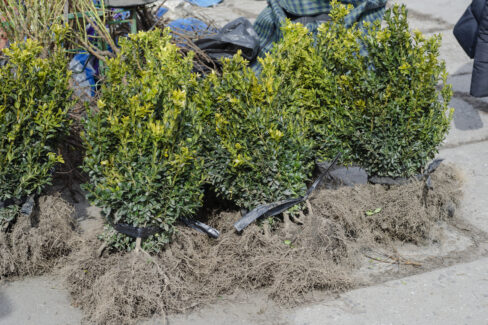
The boxwood (scientifically known as *Buxus*) develops a very dense, branched root system that sits right under the soil surface. Even on large, old specimens, the roots rarely go deeper than about 24 inches. You’ve got to keep this in mind when planting; otherwise, your boxwood will struggle to establish itself and won’t grow properly.
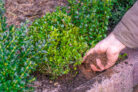
- The planting hole should only be as deep as the root ball.
- Make the hole about twice as wide as the root ball.
- Plant the boxwood at the same depth it was sitting in its previous pot.
- The roots should only be covered by a thin layer of soil.
The watering challenge
Because the roots live so close to the surface, they are very sensitive to drying out, which can quickly lead to the leaves turning brown and brittle. That top layer of soil dries out fast during hot summers! In the winter, the ground can freeze solid, preventing the plant from taking up water and leading to winter burn or frost damage. On the flip side, too much water is just as bad—soggy roots are prone to rot and *Phytophthora* (root rot), a fungus that thrives in standing water.
- Always plant boxwoods with a drainage layer.
- Make sure pots have large drainage holes.
- Water according to the plant’s needs.
- In dry summers, water daily; in winter, once a week (only on frost-free days!).
- During the rest of the year, 1–2 times per week is usually plenty.
Pro Tip:
If you aren’t sure if your boxwood needs a drink, use the “finger test.” Stick your finger into the soil—if the top 1.5 inches are dry, it’s time to water.
Mulching the root zone
Mulching is a fantastic way to keep the soil moist and keep weeds at bay. You can use bark mulch or other organic materials. Just keep an eye on the pH level; as mulch decomposes, you don’t want the soil to drop below a pH of 7 (boxwoods like it slightly alkaline to neutral). Keep the layer no thicker than 3 inches so water can still reach the roots, and refresh it annually.
Be careful around the roots!
Since those roots are hugging the surface, they are easily damaged. Any nicks or cuts can open the door for infections. Avoid using hoes or sharp garden tools near the base of the plant. It’s best to pull weeds by hand—try doing it right after watering when the soil is soft and the weeds come out easily.
Pro Tip:
Some varieties can be propagated by dividing the root ball, but only attempt this with older plants that have a very well-developed root system.
Transplanting with “strong” roots
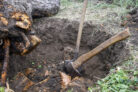
If you need to move a boxwood to a new spot, success depends entirely on the roots. A few weeks before transplanting, it’s a good idea to “root prune” by cutting around the root ball with a spade and keeping the soil consistently moist. This encourages the plant to grow a more compact root system, which makes the eventual move much less stressful for the plant.