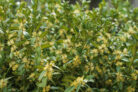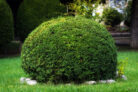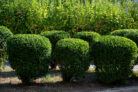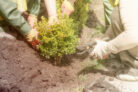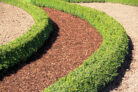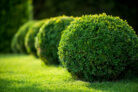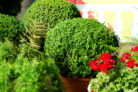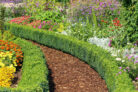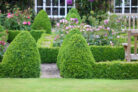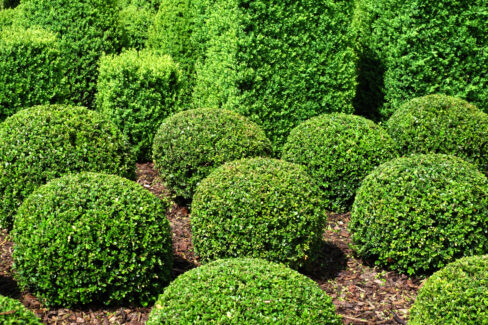
We don’t really need to spend much time describing what a boxwood looks like—chances are, you’ve seen them everywhere! If you’ve already got one in your yard, you probably know they can be a bit particular about their care. But even for seasoned gardeners, there’s usually a thing or two to learn about these classic evergreens.
Quick Facts
- Scientific Name: Buxus
- Plant Family: Boxwood family (Buxaceae)
- Distribution: Found worldwide
- Species: About 30
- Popular Varieties: Common Boxwood (*Buxus sempervirens*) and Littleleaf Boxwood (*Buxus microphylla*)
- Favorite Cultivars: ‘Angustifolia’, ‘Faulkner’, ‘Globosa’, ‘Herrenhausen’, ‘Blauer Heinz’, ‘Rotundifolia’, ‘Suffruticosa’
- Lifespan: Can live for over 500 years
- Sunlight: Full sun to deep shade
- Soil: Loamy, nutrient-rich, alkaline (chalky), and well-draining
- Growth Habit: Evergreen shrub or small tree
- Growth Rate: Very slow (varies by cultivar)
- Height: Anywhere from 20 inches to 20 feet, depending on the variety
- Hardiness: Generally very hardy; non-native or variegated types can be more sensitive to frost
- Leaves: 0.5 to 1 inch long, oval-shaped; green or variegated
- Root System: Dense, shallow roots (max. 24 inches deep)
- Bloom Time: March to May; only older plants flower; blooms are small and inconspicuous
- Fruit: Small black capsules
- Toxicity: All parts of the plant are toxic
How to Use Boxwood in Your Landscape
Boxwoods are incredibly versatile. They look just as great in the ground as they do growing in containers to spruce up a balcony or patio. Because they have dense, evergreen branches and handle pruning like a champ, you can use them in all sorts of ways:
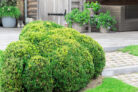
- As a standalone specimen
- Topiary (spheres, cubes, pyramids, spirals, or even fun animal shapes!)
- Bonsai
- Privacy hedges
- Garden bed edging
Pro Tip:
If you’re trying your hand at a geometric shape like a globe or pyramid for the first time, use a pruning template. You can buy these at most garden centers or easily DIY one at home.
Essential Care Tips
Fertilizing, watering, and pruning—these are the “Big Three” for boxwood health. You’ll want to fertilize only from April through August. Organic fertilizers are great, but you can also use specialized boxwood food, coffee grounds, or even stinging nettle tea. Just keep an eye on the pH; you don’t want the soil getting too acidic.
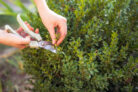
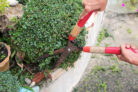
Watering is actually a year-round job. Boxwoods are evergreens, meaning they need moisture even in the winter to keep from drying out. As for pruning, start with your “shape-up” trim shortly after the first new growth appears. Follow up with a maintenance trim by August. If you’re feeling ambitious, you can do light touch-ups every four weeks. While boxwoods can handle being cut back into old wood, keep in mind they are slow to grow back!
Propagation
Growing boxwood from seed is possible, but it’s a total test of patience. Most home gardeners find it much easier to propagate via cuttings between June and August.
Pests and Diseases
Boxwoods used to be considered “bulletproof,” but since the early 2000s, a few invasive pests and diseases have made things a bit tougher. While boxwood blight and the boxwood moth are the big ones to watch out for, they can also deal with:
- Boxwood canker
- Boxwood wilt
- Boxwood rust
- Spider mites
- Boxwood gall midges
- Various types of aphids/scale