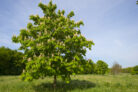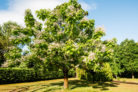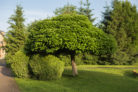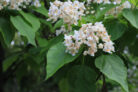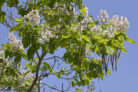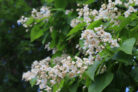
Originally native to the US, the Southern Catalpa (or Trumpet Tree) has been a favorite in European gardens since the 18th century. While it’s famous for its stunning, showy flowers, it’s also known for being a bit of a “late bloomer” when it comes to its leaves.
Leaf Drop in the Fall
The Catalpa is deciduous, meaning it sheds its foliage every year. After turning a brilliant, glowing yellow in the fall, the leaves drop fairly early in the season. This often leaves the tree standing with bare branches well before the first real bite of winter arrives.
A Very Late Start in Spring
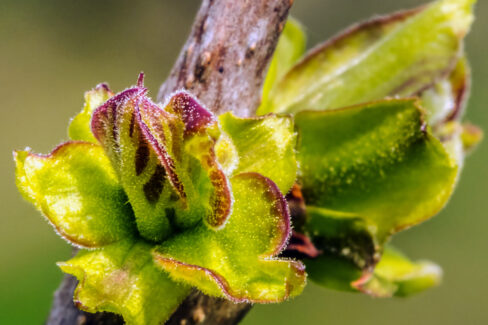
Not only does the Catalpa lose its leaves early, but it’s also one of the last trees to wake up in the spring. You usually won’t see new growth until April or even May. This means the tree spends a big chunk of the year looking pretty bare. But don’t worry—this is totally normal! Even though you have to be patient, the lush canopy that eventually appears is always worth the wait.
The “Civil Servant” Tree
Because of its unique timing, some gardeners jokingly call it the “Civil Servant Tree.” The joke is that, much like the stereotype of a government worker, the tree “arrives late to work and leaves early.” It’s the last to show up in spring and the first to clock out in autumn!
Boosting Growth with Fertilizer
While the late start is just part of the tree’s DNA, you can give it a little nudge with the right fertilizer. Nitrogen-rich fertilizers can help speed up growth and encourage the leaves to pop a bit earlier. However, be careful: too much nitrogen can actually discourage the tree from producing those beautiful blossoms.
If you want to make sure you get plenty of flowers, stick to natural, organic options. Spreading a good layer of compost around the base of the tree is usually the best way to go.
Protecting the Canopy from Late Frosts
Even though the tree waits a long time to bud, those tender young shoots can still be sensitive to late-night spring frosts. To keep your Catalpa healthy—especially if it’s a younger tree—keep an eye on the forecast. If a freeze is coming, protect the crown by wrapping it with some garden fleece or a frost blanket for the night.