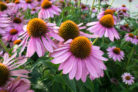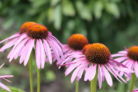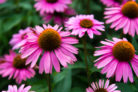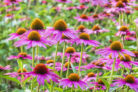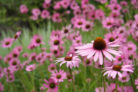
Coneflowers (botanically known as *Echinacea*) are a staple in many of our gardens, mostly thanks to those gorgeous, showy blooms. While the leaves might not be the main attraction, they’re actually pretty interesting! Beyond just helping you identify the plant, they serve a few cool purposes for us gardeners.
Characteristics
Echinacea leaves grow in two distinct ways:
- Basal leaves: These grow right at the base of the plant, looking like they’re popping straight out of the soil.
- Alternate leaves: As you move up the stem, you’ll notice the leaves don’t sit directly across from each other; they alternate heights.
While all coneflower leaves are “simple” (meaning the leaf blade isn’t divided into smaller leaflets), their look can vary quite a bit depending on the specific variety you have in your yard:
- Stems: Some have short leaf stalks, while others are a bit longer.
- Shape: You’ll see everything from egg-shaped to narrow, lance-like leaves, usually with one, three, or five distinct veins.
- Edges: Most have smooth edges, though you’ll occasionally find some that are slightly toothed or serrated.
- Texture: Most leaves feel a bit hairy or “fuzzy,” but a few varieties are smooth.
As the growing season winds down, the leaves will naturally dry out. However, if you’re having a particularly mild winter, don’t be surprised if some of them stay green!
Uses
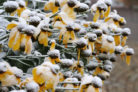
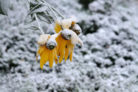
If you wait until early spring to prune your perennials, those dried leaves and flower heads can actually look quite lovely in a winter garden—especially with a dusting of frost.
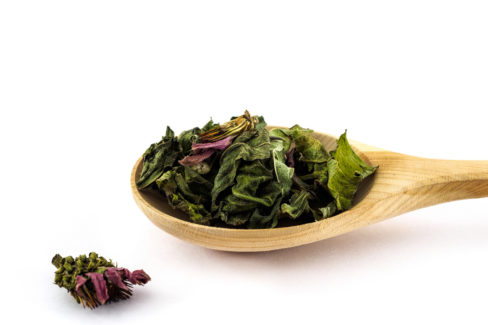
In traditional herbal medicine, the leaves and stems are often dried out. Once they’re dry, you can brew them into a tea or process them into a tincture.
Pests and Diseases
If you’ve got young coneflowers, keep an eye out—slugs and snails think those tender new leaves are a five-star snack. Luckily, once the plants get bigger and more established, they usually aren’t as bothered by these slimy visitors.
Aside from munch marks, the leaves can also tell you if your plant is feeling under the weather. One common culprit is Powdery Mildew. This fungus looks like a white or creamy-white coating on the tops of the leaves. If you don’t treat it, it can spread right up to the flowers.
Leaf nematodes are another thing to watch for; they cause unsightly spots on the foliage. Unfortunately, there isn’t a great way to get rid of these tiny roundworms, so it’s usually best to pull and dispose of any infected plants. If you’re not sure if nematodes are the problem, here’s a quick “kitchen science” test:
- Tear up a suspicious-looking leaf into a small bowl.
- Add a drop of water directly onto the leaf spots.
- Wait a few minutes. If it’s nematodes, they’ll “migrate” from the leaf pieces into the water.
- Grab a good magnifying glass, and you should be able to see them swimming around!