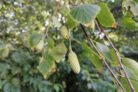
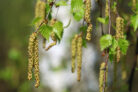
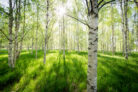
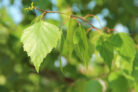
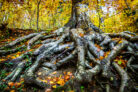
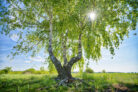
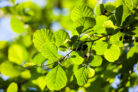
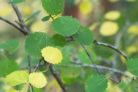
Birch leaves are simple, yet totally unmistakable. If you spot them while they’re still hanging on the branch, identification is even easier because the birch tree itself has such a unique personality. But we shouldn’t just stop at their good looks—birch leaves actually have a ton to offer us!
Different Species, Slightly Different Leaves
The Silver Birch (botanically known as *Betula pendula*) is incredibly common across Europe and is often called the Warty Birch or European White Birch. This is the leaf you’ll likely run into most often. However, even among the other 50 or so species, the variations are subtle enough that a birch leaf always looks like a birch leaf. The serration on the edges might be sharper, the length might vary by an inch or two, or the green might show up in a slightly different shade, but the family resemblance is strong.
Key Characteristics of the Leaves
The leaves usually make their debut starting in March. They often grow on short shoots in an alternating, two-row pattern. Here’s what to look for to identify that classic look:
- Oval to slightly diamond-shaped
- Toothed edges (ranging from single to double-serrated)
- Up to 5.5 inches long and 3 inches wide
- Dwarf varieties carry “mini” leaves (about 0.2 to 1.4 inches)
- Smooth or with very light fuzz
- Bright green in spring, turning medium to dark green by summer
- Young leaves feel sticky (thanks to resin secretion)
- Older leaves may show white traces from that dried resin
- The taste is slightly bitter with a lovely aromatic scent
Unique Leaf Traits of Specific Species
Blue Birch
These leaves are heavily serrated, more round-to-oval, and sit on reddish stems. They’re super decorative! The name comes from the subtle bluish shimmer on the green foliage.
Yellow Birch
This one gets its name from the color of its trunk. The leaves are a rich, deep green with double-serrated edges.
European Gold Birch
This tree sports yellow-green leaves. Since “Yellow” was already taken by another species, “Gold” stepped in as the name! (At least, that’s my theory). The leaf is egg-shaped, noticeably pointed, and has delicate serrated edges.
Downy Birch (Moor Birch)
These leaves are smaller—only about 2 inches long—but relatively wide, giving them a heart-shaped appearance. They have serrated edges and a beautiful silky, glossy finish.
Paper Birch
The leaves are about 4 inches long and very pointed, looking a bit more elongated than other birch leaves. They are dark green with serrated margins.
Sweet Birch (Sugar Birch)
The Sweet Birch has oval, elongated leaves that are usually around 4 inches long and a nice medium green.
The Birch in Autumn
In the fall, most birch trees put on a vibrant yellow show. The Gold Birch is the exception, turning a lovely shade of orange. If your birch starts dropping yellow leaves way too early in the season, it’s usually not just nature taking its course. You’ll want to check for diseases or environmental stress.
The Healthy Stuff Inside
Did you know birch leaves are edible? They’re great in salads or green smoothies. When you eat them, you’re getting a boost of health-promoting compounds, including:
- Vitamin C
- Betulin
- Flavonoids
- Tannins
- Essential oils
- Salicylic acid compounds
Pro Tip:
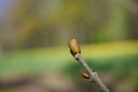
You don’t have to wait for the leaves to fully unfurl in the spring. You can harvest the tiny, light brown to green buds (about 4mm long). They are just as healthy and extra tender. Don’t worry about the tree—it will immediately push out new growth, so it won’t go bare!
What the Leaves are Good For
The birch is often called the “kidney tree.” If you deal with kidney or bladder issues, it’s definitely worth looking into the healing properties of this tree. It’s also used for rheumatism, gout, and water retention. Even those annoying annual cold symptoms can be eased with birch leaves. Just pour 8 oz of hot water over 1 tablespoon of fresh or dried leaves. Cover it, let it steep for ten minutes, strain, and enjoy your tea.
Birch Leaves as a Beauty Helper
Because birch helps flush out water and toxins, it’s a fantastic ally for skin issues. Eczema, blemishes, and oily skin can often be improved by using birch—either internally as a tea or externally as an ingredient in oils and creams.
If you use a birch extract as a hair rinse, it can soothe the scalp and prevent dandruff while making your hair look fuller and shinier.
A quick note:
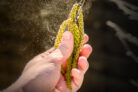
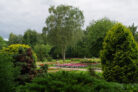
If you plant a birch tree in your garden or keep a small potted version, you’ll have easy access to these healthy leaves. However, if you suffer from pollen allergies, you might want to skip it, as birch pollen is a common trigger for hay fever symptoms.