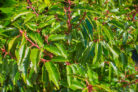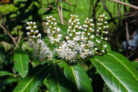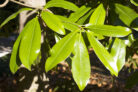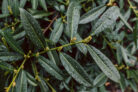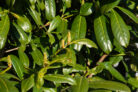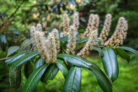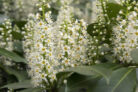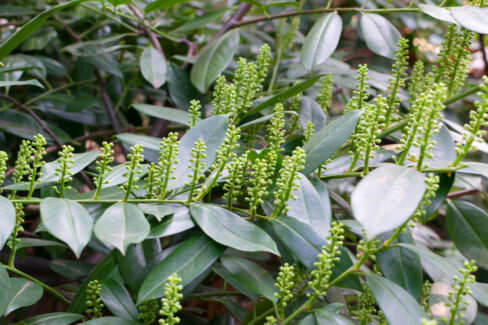
Notice some tiny holes popping up on your cherry laurel leaves? Your first instinct might be to blame hungry bugs, but more often than not, there’s a different culprit behind the scenes. In most cases, those holes are actually caused by a fungus.
How to Spot the Real Cause
Take a close look at the damage. If you see half-circle notches eaten away from the edges of the leaves, you’ve likely got a vine weevil problem. However, those pests don’t usually poke holes right through the middle of the leaf. If you’re seeing “Swiss cheese” patterns, you’re probably dealing with a fungal infection.
This fungus works its way across the plant in a specific way. First, you’ll notice small spots on the leaves turning a lighter color. This is where the leaf tissue is starting to die off, creating little brown spots. Eventually, that dead tissue simply drops out, leaving behind small holes. It looks exactly like someone took a shotgun to your hedge, which is why gardeners call this “Shot Hole Disease.”
How to Stop the Spread
If you catch the fungus early, it’s pretty easy to manage. Simply prune away the affected areas. But here’s a pro tip: don’t toss those clippings into your compost pile! You should either burn the infected leaves or seal them in a bag and put them in the trash. Otherwise, the fungus can hitch a ride back into your garden, and that’s a risk you definitely don’t want to take.
If the infection has already taken over a large part of the plant, you’ll need to step up your game. Try brewing a homemade spray using onions and garlic; spraying this on the plant for several days can help keep the fungus in check. Even with the spray, make sure to prune back the most heavily affected branches and dispose of them properly to give your laurel a fresh start.