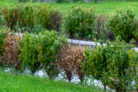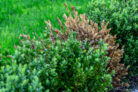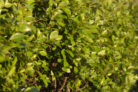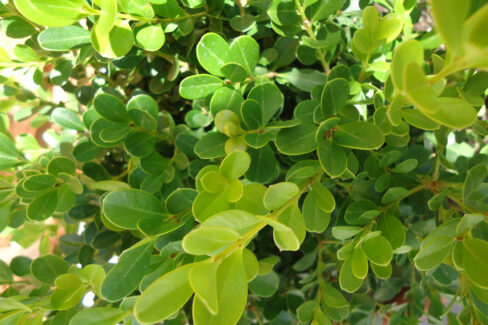
If you’ve got an evergreen in your garden, seeing it drop leaves is enough to make any gardener panic. When it comes to the slow-growing boxwood, every single leaf counts! But before you rush in to save it, you need to play detective and figure out exactly what’s going wrong.
Common Culprits for Leaf Drop
I’m sure most of you already have your watering routine and fertilizing schedule down to a science. However, it’s worth a reminder: both bone-dry soil and “wet feet” (standing water), as well as a lack of nutrients, can cause your boxwood to shed. If you’ve ruled out a watering or feeding issue, your shrub is likely dealing with a fungal infection or some uninvited pests.
How to Spot Fungal Infections
There are four big troublemakers you need to watch out for: Boxwood Blight (Cylindrocladium buxicola), Boxwood Canker (Volutella buxi), Boxwood Wilt (Fusarium buxicola), and Boxwood Rust (Puccinia buxi). Usually, the plant will give you a few warning signs before the leaves actually start falling off:
- Discolored leaves
- Leaf spots (keep a close eye out for orange or brown ones)
- Dry, brittle foliage or stems
Fighting Back Against Fungus
Fungal infections move fast. If left unchecked, that leaf loss will turn into a total disaster, and you could lose the whole plant. To save your boxwood, you’ve got to act now. Grab your pruning shears, make sure they are sharp and disinfected, and cut away all the infected areas. Don’t be afraid to cut back into the old wood if you have to. It might take a while for the plant to grow back, but it’s the only way to give it a fighting chance. Make sure to gather and dispose of all the clippings and fallen leaves. If you’re dealing with the dreaded Boxwood Blight, it’s also a smart move to swap out the top layer of soil around the base of the plant.
Pro Tip:
Once you’ve finished the “surgery,” give your boxwood a little TLC by fertilizing it with some compost or horn meal. This gives it the nutrients it needs to push out healthy new growth.
Identifying and Managing Pests
It’s not just fungus you have to worry about. Boxwood Psyllids (Psylla buxi) cause yellowing and “cupping,” where the leaves curl up like little spoons. Boxwood Leafminers (Monarthropalpus buxi) create blister-like galls on the leaves, while Boxwood Spider Mites (Eurytetranychus buxi) leave behind tiny white speckles. If any of these three move in, leaf drop is usually right around the corner.
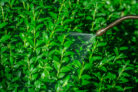
Your first line of defense is, once again, your shears. Prune off the damaged sections. Afterward, you can treat the shrub with a pest control spray based on neem oil or canola oil to keep the bugs at bay.