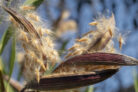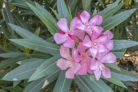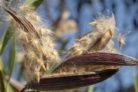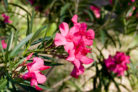
If you get a little lucky with your pollinated flowers, your oleander might start growing what we call “follicles.” These pod-like fruits are actually goldmines for seeds if you’re looking to propagate your plant. Here is the lowdown on what you need to know about oleander fruit.
Fruit Growing from Oleander Blooms
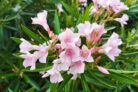
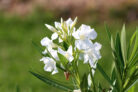
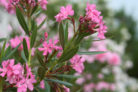
Oleander fruits develop directly from the blossoms. However, there’s a catch: the flowers must be successfully pollinated and fertilized first. Only the blooms that get that “magic touch” will eventually transform into seed pods.
How Pollination Happens
Oleander flowers are naturally hermaphroditic, which is just a fancy way of saying they have both male and female parts. This means you usually don’t need a second plant for fertilization; they can often do the job themselves. Most of the time, local insects handle the heavy lifting, but if you want to be sure, you can play bee yourself and use a small paintbrush to hand-pollinate the flowers.
What Do Oleander Fruits Look Like?
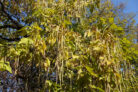
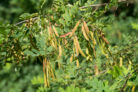
Once fertilization is a success, the plant develops follicles. Here’s how to spot them:
- They grow to be about 4 inches (10 cm) long.
- They look a lot like bean pods.
- They start out green and eventually turn brown as they ripen.
Using the Fruit for Propagation
Inside these oleander pods, you’ll find individual seeds. These are exactly what you need if you want to try growing new oleanders from scratch.
Energy Check: Fruit vs. Flowers
Growing these seed pods takes a ton of energy out of your plant—energy that would otherwise go toward making more beautiful flowers. You’ll want to decide if you actually want the seeds or if you’d rather have a more prolific bloom. If you prefer flowers, just snip the pods off with a sharp pair of shears. This redirects the plant’s strength back into its blossoms. If a showy floral display is your priority, definitely prune those pods away.
Safety First: The Fruit is Toxic
Just like every other part of the oleander plant, the fruit is highly poisonous. If you have kids or pets running around, make sure your oleander is kept well out of their reach. In some cases, it might even be better to opt for non-toxic alternatives instead. Whenever you’re handling the fruit or pruning the plant, be sure to wear gloves to protect your skin from the toxic sap.