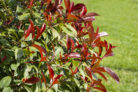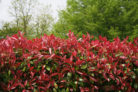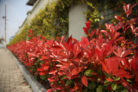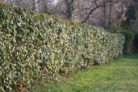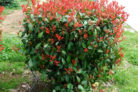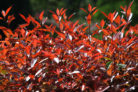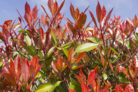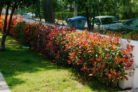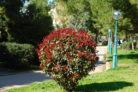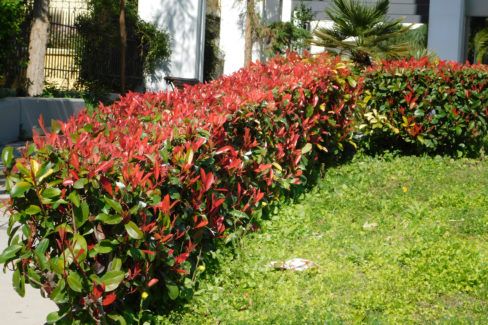
At first glance, the Photinia (often called Red Tip Photinia) seems like the perfect candidate for a privacy hedge. It’s evergreen, grows fast, and looks stunning. However, with about 60 different species out there, not all of them are created equal when it comes to your backyard. To help you get it right the first time, here is what you need to know about planting a Photinia hedge.
Which Photinia is right for your hedge?
Technically, you can use almost any variety for a hedge, but your local climate is the deciding factor. The fan-favorite ‘Red Robin’ Photinia (bot. Photinia fraseri) is actually only moderately hardy. It doesn’t handle deep or prolonged freezes very well. If you live in a milder region, you’re golden.
If you live somewhere with harsher winters, the Oriental Photinia (bot. Photinia villosa) is a much tougher choice. It grows about 10 to 12 inches a year and can reach heights of up to 15 feet. Another great option is the Stranvaesia (bot. Photinia davidiana), which is also considered hardy. It grows a bit faster but usually tops out at around 10 feet.
How to plant your Photinia hedge
Even though Photinias are tough, picking the right spot is key. They actually prefer dappled shade or partial sun over intense, scorching midday sun. Keep in mind that if they’re in too much shade, you might see fewer flowers. They thrive in fresh to slightly moist soil—anything from sandy to loamy works. Bonus tip: they look fantastic when mixed with other shrubs like Forsythia or Cherry Laurel!
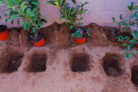
Before you start digging, line up your pots along the desired path to check the spacing. You’ll want about 20 inches (half a meter) between each plant—don’t crowd them, but don’t spread them too thin either. Give your Photinias a good soak while they’re still in the pots; this helps the roots settle in faster. Dig your holes about twice as wide as the root balls.
If your soil is super compacted, mix in some fine gravel or sand to help with drainage. You can also boost the nutrient levels by adding some mature compost. Set your plants in, fill the holes back up with soil, tamp it down firmly, and give them a thorough watering.
Watering and feeding your new hedge
For the first few weeks, keep a close eye on the water. Once they’re established, you only need to water when the soil feels a bit dry to the touch. As for fertilizer, there’s no rush. If you added compost during planting, they’ll have plenty of nutrients for a while. By next spring, you can start using a standard liquid fertilizer to keep them happy.
When will it actually be a “privacy” hedge?
Expect to wait about two to three years before your hedge is tall and thick enough to block out the neighbors. This depends on the variety you chose, your local weather, and how often you pick up the garden shears.
Pruning your Photinia hedge the right way
The best time to trim is right after the flowering season. Pruning isn’t just about keeping things tidy; it actually encourages the plant to grow thicker. Start by cutting away any diseased or dead branches. You can thin it out a little, but don’t go overboard. Cutting it back stimulates new growth and prevents the bottom of the hedge from becoming “leggy” or bare.
You can safely trim individual shoots back by a third, or at most, a half. Just make sure the hedge doesn’t become so dense that air can’t circulate. If the leaves stay wet for too long after a rainstorm, you’re looking at a recipe for fungal infections that can quickly spread to the rest of your garden.
Winter care for Photinia
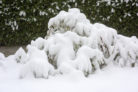
Young Photinias are a bit sensitive and don’t handle frost well. You’ll definitely want to provide some protection during their first winter. Focus on protecting the root ball from freezing—if the roots stay healthy, the plant can bounce back in the spring even if the tips get nipped.
Wrapping individual plants loosely in garden fleece can prevent frost damage. If a few branches do freeze, don’t panic—just prune them off in the spring. These plants are pretty resilient and usually recover quickly.
Quick Summary:
- Generally fast-growing
- Choose a variety based on your local winter temps
- Great for “mixed” hedges
- Improve soil with compost or sand if needed
- Space plants at least 20 inches apart
- Water thoroughly after planting
- Prune regularly for a thicker look
- Protect young plants from frost
- Keep an eye out for pests and diseases
Pro Tip: You don’t have to stick to just Photinia! Mixing them with Forsythia or Cherry Laurel creates a beautiful, textured look that adds a lot of character to your yard.