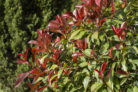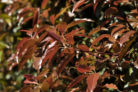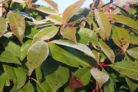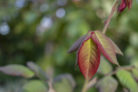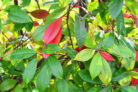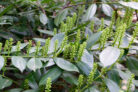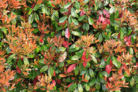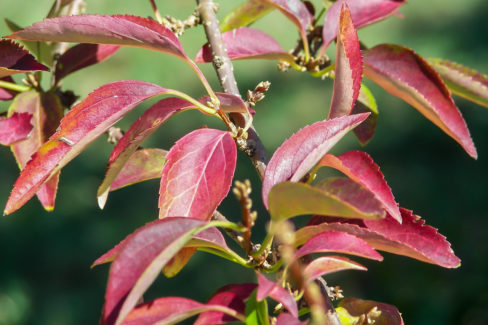
When your Photinia (also known as Red Tip or Christmas Berry) starts pushing out those gorgeous reddish new leaves, it’s a real showstopper in the garden. Eventually, most varieties transition to a glossy, vibrant green, but no matter which type you have, nothing ruins the look faster than seeing those leaves full of holes.
What’s eating my Photinia?
Generally speaking, Photinias are pretty tough and resistant to most pests and diseases. However, they do have a few Achilles’ heels. Some varieties are prone to fire blight, which can spread like wildfire through a garden. But if you’re noticing jagged, chewed-up leaf edges, the culprit is almost certainly the Black Vine Weevil—a particularly stubborn little pest.
How do I spot a Black Vine Weevil?
The tricky thing about Black Vine Weevils is that they’re night owls. Since they’re only active after dark, you’ll rarely see the beetle itself. What you *will* see are very distinct, semi-circular bite marks along the edges of the leaves. These flightless insects aren’t picky eaters, either; besides Photinia, they love to snack on Rhododendrons, Cherry Laurels, and Roses. During the day, they’re masters of hide-and-seek, tucking themselves away so well you might never spot one.
But here’s the real kicker: the adult beetles aren’t the only problem. Their larvae—creamy white grubs about half an inch long—live underground and feast on the plant’s roots. If the root damage gets too severe, the plant can’t take up enough water or nutrients. This leads to leaves turning brown, and eventually, the whole shrub might just dry up and die.
How can I get rid of them?
If the roots are already toast, no amount of watering or fertilizing is going to save your Photinia. That’s why it’s super important to act as soon as you see those first notches in the leaves. You can try using beetle traps, but the most effective “pro-tip” is using beneficial nematodes. These tiny roundworms are natural predators that hunt down the larvae in the soil.
Quick Facts: The Black Vine Weevil
- Size: About 1/8 to 1/2 inch (4 to 14 mm)
- Appearance: Usually black or dark brown with a bumpy or ridged back, often featuring small yellow or brown spots. They have a short, sturdy snout.
- Flightless: They can’t fly, so they crawl everywhere.
- Night Owls: They only come out at night.
- Larvae: About 10 mm long, whitish, and found in the soil where they munch on roots.
Pro-tip: You can make a simple DIY trap by filling a small flower pot with wood wool (excelsior) and placing it upside down near the plant. The weevils will use it as a cozy hideout during the day, making it easy for you to collect and remove them!