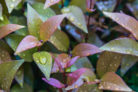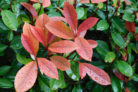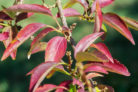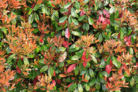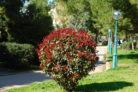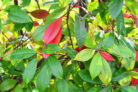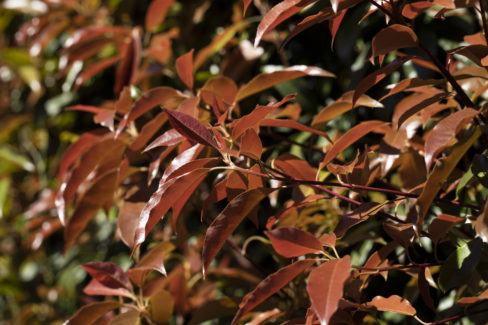
When deciduous plants turn brown in the fall, it’s just nature doing its thing. But when your evergreen Photinia (Red Robin) starts sporting brown leaves, it’s a different story. Stick with me to find out when you should actually start worrying and what you can do about it.
Potential causes for brown leaves:
- Lack of water
- Sunburn
- Frost damage
- Fungal diseases: Apple scab, leaf spot, powdery mildew
- Fire blight (a serious bacterial infection)
- Pests (Vine weevils, aphids)
Why are the leaves turning brown?
The reasons for brown spots or entire leaves turning brown are actually pretty varied. The most “innocent” cause is usually just thirst; you can fix a lack of water pretty quickly with a good soak. Sunburn or frost damage can also be the culprits behind that unsightly discoloration.
However, you really need to take action if you’re dealing with serious plant diseases or a pest infestation. We’re talking about bacterial infections like the dreaded fire blight or fungal issues like leaf spot. In these cases, your plant needs help fast if it’s going to survive.
As for pests, Photinias are favorite snacks for vine weevils and aphids. The vine weevil is a flightless beetle that leaves tell-tale notches in the leaves. Since they’re nocturnal, you’ll rarely see the beetles themselves, but their larvae can do some serious damage to your Photinia’s root system underground.
How can I save my Photinia?
Fire blight is feared for a reason. It spreads like wildfire to neighboring plants and can cause massive damage. If you spot it, prune back the affected areas immediately and aggressively. Targeted pruning is also your best bet against leaf spot. For pests, you’ll want to use an appropriate treatment to get the population under control.
How can I prevent brown leaves in the first place?
The best medicine is a good offense: the right location and solid care. Photinias thrive best in partial shade with soil that stays consistently moist but not soggy. Make sure your plants have enough “breathing room”—thin them out occasionally and don’t crowd them too close to their neighbors. Wet, stagnant foliage is an open invitation for fungi. Finally, a regular fertilizing routine will keep your Photinia strong and resilient.
Pro Tip: Even evergreens drop a few leaves now and then to make room for new growth. If it’s just a few here and there, your Photinia is likely perfectly healthy!